Knowledge Article
Food hoses: How to choose the right one for safe and efficient production

Choosing food hoses is more than a technical detail - it's an investment that affects production hygiene, work efficiency and your brand's credibility. Moreover, the choice is crucial for long-term reliability. Whether you need a dairy hose for milk handling, a PU hose for beverages or a suction and pressure hose for the bakery and meat industry, the right food hose is essential.
One of the most important factors? The certifications. They act as a seal of quality that both guarantees safety and reduces the risk of breakdowns and costly recalls.
Food hose certifications - your guarantee of safety and profitability
In the case of food hoses certifications are not just a requirement, but a guarantee that the hose meets the standards required by the industry. This is to ensure that the materials do not release substances that affect food, that the hoses can be cleaned effectively and that they maintain their performance over time.
Certified hoses contribute to:
- Safety in production: No harmful substances migrating to the food.
- Reduced risk of disruption: hoses that are tested to withstand harsh environments.
- Stronger brand: You clearly demonstrate to customers and regulators that you take food hygiene very seriously.
In short, certifications are as much a hygiene and safety issue as a competitive tool.

The main certifications for food hoses
FDA - global standard for safety and quality
FDA (Food and Drug Administration) certification is one of the most established international standards. It guarantees that the material in contact with food does not affect taste, smell or safety. It is an absolute requirement for exports to the US - but is also seen as a seal of quality in other markets.
EU 10/2011 - Requirements for the European market
For European food producers, EU 10/2011 is a crucial standard. It regulates plastic materials intended to come into contact with food and sets clear limits on the migration of substances from the hose to the food. This is particularly important for sensitive products such as milk and cream, where small changes can affect both quality and shelf life.
NSF - the hygiene requirements that protect both product and consumer
NSF certification focuses on hygiene. Food hoses with this label are designed to be easy to clean, resist bacterial growth and ensure high standards in processes. This makes them particularly relevant for dairy hoses and hoses in breweries, where sanitation is crucial for product safety.
WRAS - safe handling of water and water-based products
WRAS certification is relevant in applications where hoses are used for drinking water or water-based foods. It ensures that the hose does not release substances that affect water quality. In this way, it contributes to safe and reliable water management.
ISO 9001 - quality at every stage of production
Although ISO 9001 is not a direct food certification, it is important from a quality perspective. It is the supplier who is certified and this shows that the supplier works with a systematic approach to quality - from raw material to finished product. As a result, you get an extra assurance that every hose delivered is of a consistent and documented standard.
More than certifications - factors that influence the choice of food hose
Certifications are crucial, but at the same time, the choice of food hose should also be based on practical conditions in production. Some of the most important factors are:
- Temperature range - should the hose handle both hot and cold media?
- Flexibility - is a flexible hose needed for tight installations?
- Chemical resistance - can it withstand repeated cleaning with harsh products? Read our guidelines for cleaning food hoses to ensure hygienic and sustainable operation.
- Compressive strength - can it handle the load in your application?
By taking these factors into account, you reduce the risk of downtime, extend hose life and contribute to more stable and cost-effective production.
The right food hose for long-term reliability
A food hose is not a simple consumable - it is an important part of the process quality assurance. After more than a decade in the industry, I can say that the biggest differences are often seen in the long run: the hose withstands or succumbs to repeated CIP/SIP processes, chemicals degrade the material at different rates, and temperature changes determine how well the hose maintains its properties.
Certifications such as FDA, EU 10/2011, NSF, WRAS and ISO 9001 minimize risks and thus ensure that production continues stably and hygienically over time. When you invest in the right food hose, you strengthen both food safety and the long-term sustainability of your business.
Not sure which one hose that is best for your particular application? If so, contact us today - I'll be happy to help you analyze your needs and recommend a solution that will last over time.
This text was written by Tobias Sander (tobias.sander@colly.se), Sales Manager Hoses at Colly Flowtech.
Explore our range of food hosesFrequently asked questions about food hoses
What is a food grade hose and what certifications are required for food grade hoses?
A food hose is designed to handle food safely. To be classified as food safe, the hose needs certifications such as FDA, EU 10/2011, NSF or WRAS. These guarantee that no harmful substances migrate to the food and that the hose meets hygiene requirements.
Which material is best for food hoses in dairy, beverage and meat industries?
The choice depends on the application. PU hoses are often used for beverages, rubber dairy hoses for milk and cream, and suction and pressure hoses for meat and bakery products. For high temperatures or chemical resistance, PTFE hoses are used.
How to properly clean a food hose?
Cleaning should be done after each use with warm water, approved cleaning agents and steam if necessary (CIP/SIP). It is important to follow the hose manufacturer's guidelines and ensure that no residues or biofilm remain. Regular cleaning will extend the life of the hose and maintain food safety.
What temperatures and pressures can food hoses withstand?
PVC hoses can often handle -20°C to +60-90°C, while PTFE hoses can handle up to 260°C. Pressure resistance varies but should always be checked against the manufacturer's data. Always choose a hose with a safety margin for pressure peaks and temperature variations.
How to choose the right food hose for your production?
Consider the product (dairy, beverage, meat, bakery), operating conditions (temperature, pressure, chemicals) and certifications. Check the compatibility of the material with the food and that the hose is easy to clean. For long-term reliability, it is best to consult a supplier who can adapt the solution to your production.
Explore our food hoses

For extraction of light chips, gases, vapors and solvents.
37
variaties
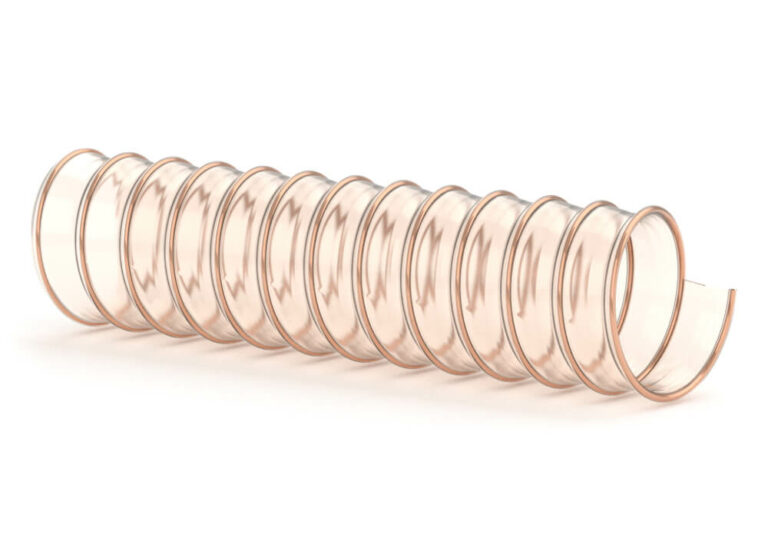
Suitable for chip extraction from woodworking machines.
38
variaties

Suitable for fatty foods such as oil, fat and dairy products.
7
variaties

Suitable for fatty foods such as oil, fat and dairy products.
7
variaties
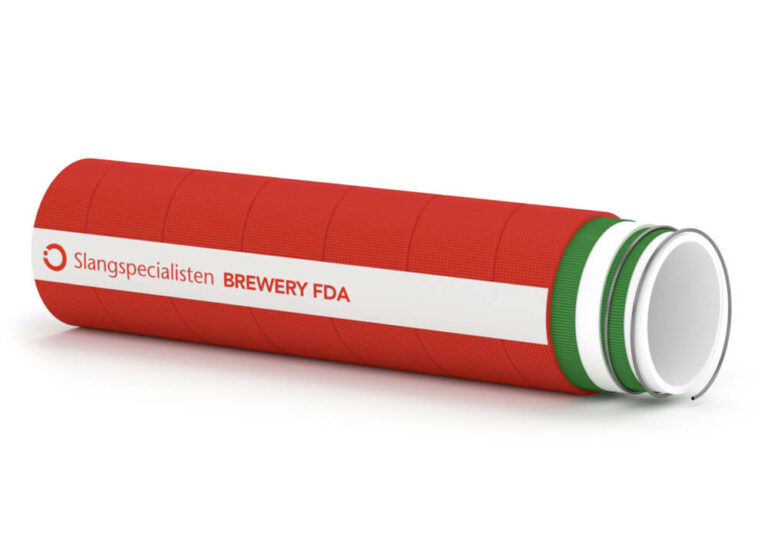
Especially suitable for beer, wine, spirits and cider. FDA approved.
7
variaties
Do you have any questions?