Maglev technology: How to maximize yield in sensitive bioprocesses
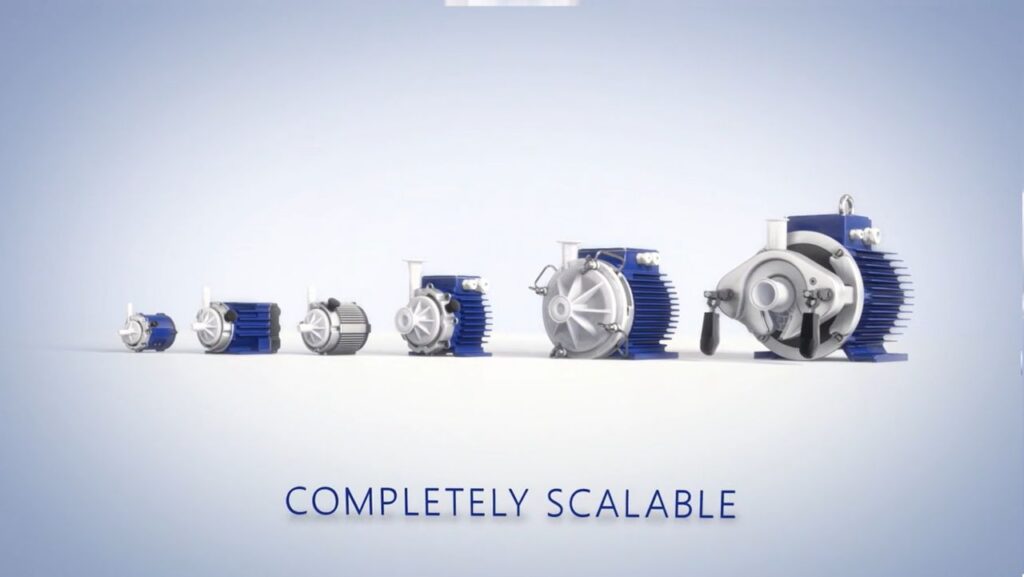
In bioprocessing, enormous resources are spent on optimizing cell cultures and formulations. But one factor that often determines the end result is how the product is transported through the system. The choice of pumping technology directly affects product yield, reliability and quality.
At Colly Flowtech, we work with our partner Levitronix to offer solutions based on Maglev technology. Because whether it's cells, proteins or sensitive particles like LNPs, the choice of pump can make the difference between a successful batch and costly product loss.
What is Maglev technology and how does magnetic levitation work?
Traditional pumps, such as peristaltic or diaphragm pumps, rely on mechanical action; they squeeze or push the liquid. These principles mean that the product is subjected to stresses that can damage cells, destroy the structure of proteins or create aggregation (clumping).
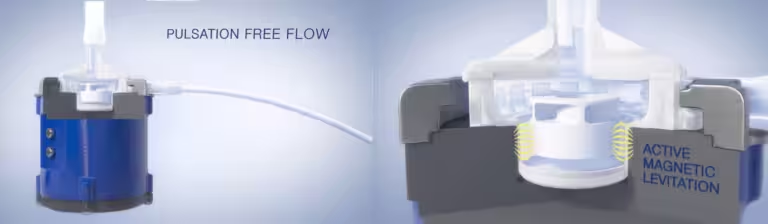
Maglev (magnetic levitation) works differently. Here, the impeller “floats” in a magnetic field, completely without contact with bearings or shafts.
The benefits of contactless operation:
Frictionless operation: No rotating parts touch each other, eliminating heat generation.
- No mechanical seals: The need for shafts and wear parts disappears, reducing the risk of particles.
- Completely contact-free: Nothing mechanical touches the liquid inside the pump housing itself.
The result is a very smooth and controlled flow, with no pulsation and without the localized forces that occur in traditional pumps.
Three factors that make Maglev technology so gentle
There are three main factors behind the gentleness of the technology:
- Eliminated heat and abrasion: Since no parts meet, there is no localized heat generation that could otherwise destroy sensitive biological molecules.
- Linear flow for stable processes: You get a flow without pressure surges. This is critical for maintaining stability in, for example, TFF filtration (Tangential Flow Filtration) or in accurate formulation.
- Soft passage (Large Gap Design): The relatively large gap between the impeller and housing allows the fluid to pass without pressure peaks. This reduces the risk of cells being “squeezed” or torn apart by turbulence.
What do studies on Maglev technology in bioprocesses show?
There is a clear trend in scientific literature: non-contact pumping with magnetically levitated impellers consistently results in lower mechanical stress compared to traditional pumping principles. Eliminating the physical contact ensures direct improvements in several critical areas:
Results from research and testing
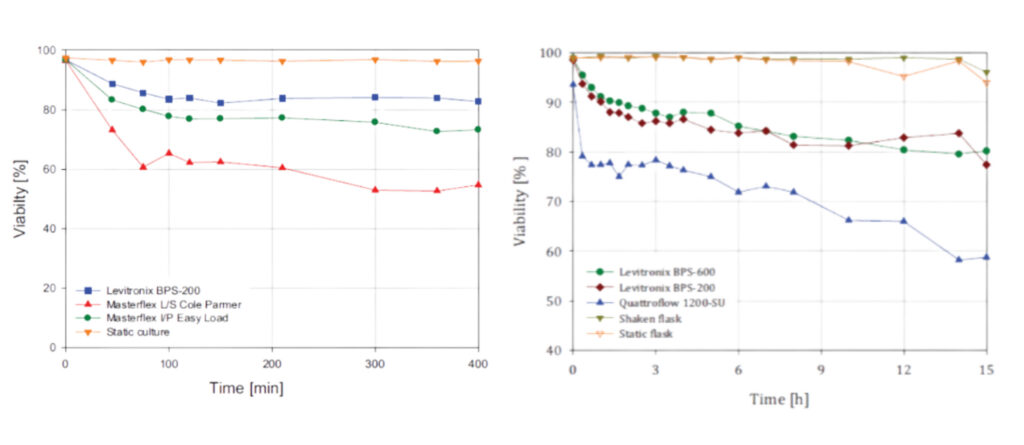
- Higher cell viability: In studies on CHO cells, there is a significantly higher survival rate after pumping with Maglev compared to peristaltic pumps, which often result in a large reduction of viable cells.
- Protection against shear stress: Comparative tests show that Maglev generates the lowest degree of cell damage. The difference is particularly evident at higher flows and longer operating times where mechanical stress otherwise accumulates.
- Preserved protein quality: Tests on model proteins (e.g. lysozyme) show that Maglev pumps maintain the natural structure and activity of the protein, while mechanical pumps can lead to aggregation.
- Stable particle systems and emulsions: By measuring droplet size in emulsions, Maglev preserves particle size distribution significantly better than traditional alternatives.
An investment in a safer process
Using Maglev technology is about minimizing technical risks and creating more stable bioprocesses. For bioprocesses, this means a higher product yield and better product quality as mechanical stress destroys fewer batches.
Especially when handling high-value products such as mRNA, viral vectors or sensitive cell cultures, the technology acts as an insurance for product integrity. At Colly Flowtech, we often see Maglev technology become the common denominator in processes where quality is at the absolute center.
Want to dive deeper into how technology can impact your specific flows? Contact me at (viktor.fredriksson@colly.se), I would be happy to help you look at how a transition to Maglev can optimize your processes.
References
About Levitronix
Levitronix is a world leader in magnetic levitation, bearingless motors and a pioneer in advanced process technology for microelectronics, life science and industry. Through its patented technology, the motor and magnetic bearing are integrated into one unit, enabling non-contact, wear-free operation.
The company's product portfolio, which includes pumps, mixers and flowmeters, is designed for maximum precision and reliability in demanding environments. With headquarters in Zurich and global facilities, Levitronix combines technical excellence with local presence to meet the future needs of innovative process technology.

Do you have any questions?