Guidance on cleaning and maintenance of food hoses
It is necessary to comply with government regulations related to cleaning and
disinfection of foodstuffsangar. The cleaning and disinfection suggestions listed below are guidelines only.
Hose life is affected by the cleaning process due to the mechanical and chemical stresses that occur during the cleaning and disinfection procedure. The service life of rubber hoses depends on their composition as well as the environment of use, which in turn is influenced by the product, the process temperature, cleaning and germicidal compounds and exposure time.
Users should frequently monitor the physical condition of the rubber hose contact surfaces. Such observations are necessary to determine the actual sanitary service period of rubber hoses.
It is further recommended that the rubber hose be replaced before surface defects or wear occur. Routine replacement schedules should be established and followed.
Food hose users should be guided by their own, or specific industry cleaning and sanitizing procedures and standards. For example, the wine industry may have different standards than the dairy industry and any standards applied to a specific industry supersede the guidelines in this guide.
The effectiveness of the guidelines in this guide depends on the practice and care taken by users.
Cleaning and disinfection of food hoses is intended to remove:
- Other sources of contamination.
- Food particles
- Residues of cleaning agents or disinfectants.
Guide - Step by step
1. frequency
The frequency of the cleaning and disinfection cycle is influenced by the type of food or drink being transported, as well as the level of contamination risk. In principle, the cleaning and disinfection process should be carried out regularly.
2. washing
The first step in the cleaning process is to wash the hose thoroughly with warm drinking water. Washing with hot drinking water facilitates the cleaning of the hose but does not eliminate the need to clean the hose with an appropriate detergent followed by disinfection of the hose. The temperature of the hot water and the duration of the wash/rinse cycle are influenced by the characteristics of the material/medium being transported. The first wash/rinse with hot potable water should be completed as soon as possible after the transportation process is finished. All remaining water and residues from the first wash/rinse cycle must be completely drained.
3. cleaning/disinfection
The choice of a cleaner and disinfectant depends on the material/medium being transported. The recommendation of the detergent and disinfectant manufacturer should be strictly followed, especially regarding concentration levels.
After cleaning the hose with detergent, the hose must be rinsed with drinking water. Then the hose must be sterilized, either with steam or with chemical solution.
Steam is classified as a ”physical” disinfectant: its effectiveness in eliminating bacteria and other contaminants varies depending on the material/media being transported and the procedure used by the users.
Chemical disinfectants such as caustic soda, nitric acid, peracetic acid, phosphoric acid, chloroacetic acid or other acids suitable for the disinfection of food tubes must be carefully selected to ensure optimal effectiveness while guaranteeing maximum safety and health. The choice of a particular disinfectant should take into account concentration levels, temperature, cycle time and the type of product/material being transported.
As soon as the disinfecting treatment with chemical solutions is done, the hose must be rinsed thoroughly and for a sufficiently long time with drinking water to eliminate any chemical residues from the disinfection treatment.
4. process controls
The outcome of the cleaning and disinfection process must be checked regularly to ensure that all contamination and residues have been eliminated. Any anomalous events must be addressed in a corrective action procedure
| Medium | Slang | Concentration | temperature | |
| Rinsing | Hot water | NR / NBR / SILICONE / EPDM / BIIR / UPE / PTFE | - | Max 90°C |
| Physical disinfectant | Steam (we suggest open steam sterilization) | NR / NBR | - | Max 110°C Max 10 miN |
| EPDM / BIIR / UPE / PTFE | - | Max 130°C Max 30 min | ||
| SILICON | - | Max 135°C Max 18 min | ||
| Chemical disinfectant | Acid (i.e. nitric acid) | NR / NBR / SILICONE | 0,1% 2% | Max 65°C Max 25°C |
| EPDM / BIIR / UPE / PTFE | 0,1% 3% | Max 85°C Max 25°C | ||
| Citric acid | PU | 5% | Max 20°C | |
| Alkaline solution (i.e. Caustic soda) | NR / NBR / SILICONE | 2% 4% | Max 65°C Max 25°C | |
| EPDM / BIIR / UPE / PTFE | 2% 5% | Max 85°C Max 25°C | ||
| Caustic soda | PU | 2% | Max 20°C | |
| Disinfectants | NR / NBR / SILICONE | 1% | Max 25°C | |
| EPDM / BIIR / UPE / PTFE | 1% | Max 40°C |
Please note
The present table is based on tests and publicly available sources and is considered reliable.
However, the table should only be used as a guide as it does not take into account all the variables that may be encountered in actual use, such as temperature, pressure, exposure time, stability of the liquid and possible contamination.
Behöver du råd om livsmedelsslangar?
Rätt slang behöver passa både produkten som transporteras och hur den rengörs. Berätta om din applikation och dina krav, så hjälper vi dig att hitta en lämplig lösning.
Schedule a consultationExplore our range of food hoses
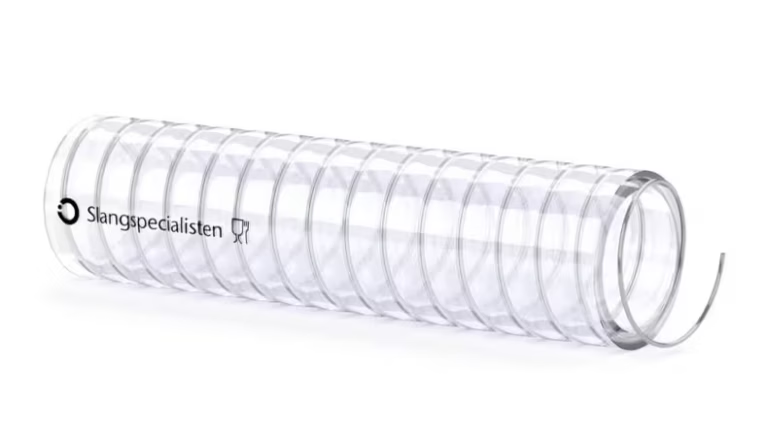
Suitable for the transportation of salt water, sludge, granules, grain, chemicals, etc. Food approved.
16
variaties
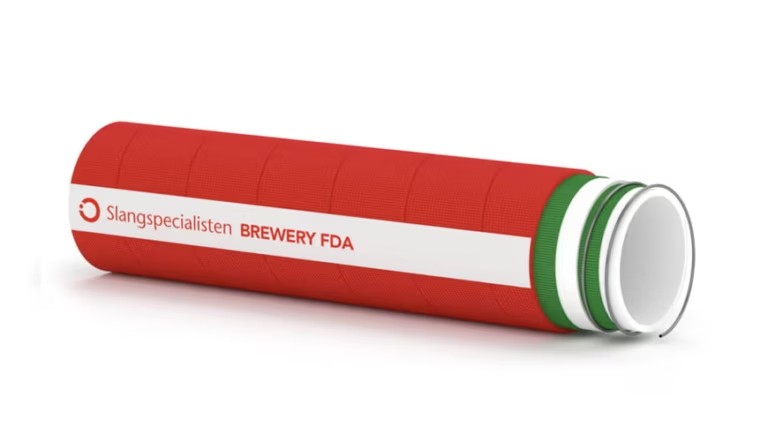
Especially suitable for beer, wine, spirits and cider. FDA approved.
7
variaties
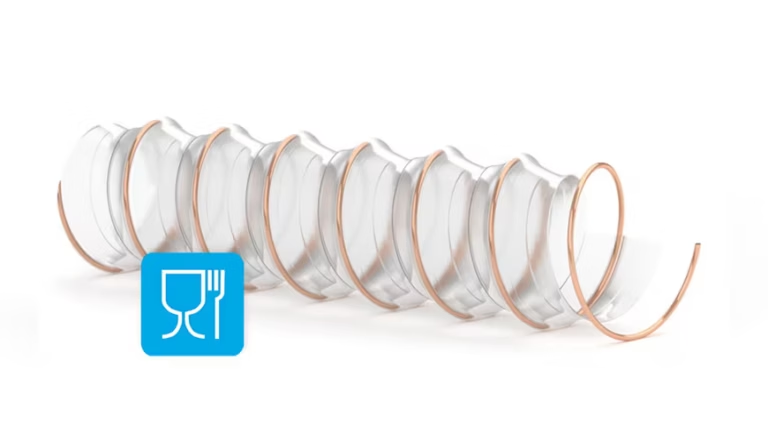
For extraction of light chips, gases, vapors and solvents.
11
variaties

In the food industry for hot and cold liquids.
4
variaties
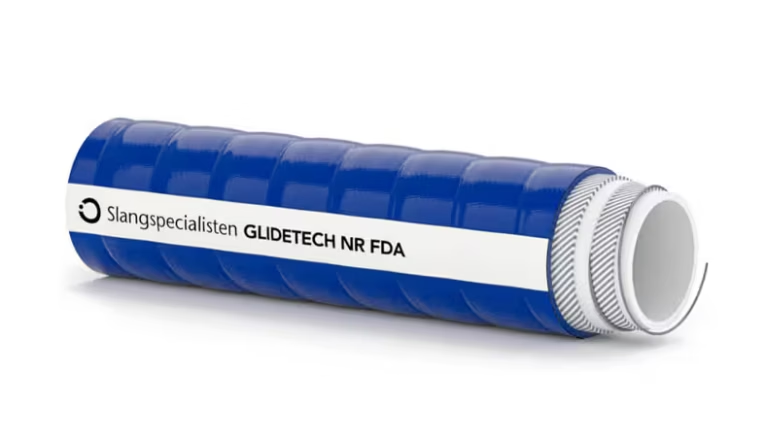
50% discount on select sizes
6
variaties

Suction and pressure hose for fatty foods such as oil and grease.
6
variaties
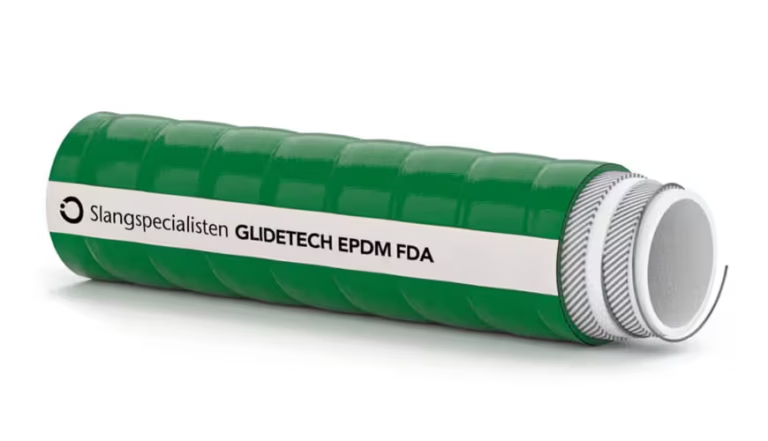
50% discount on select sizes
7
variaties
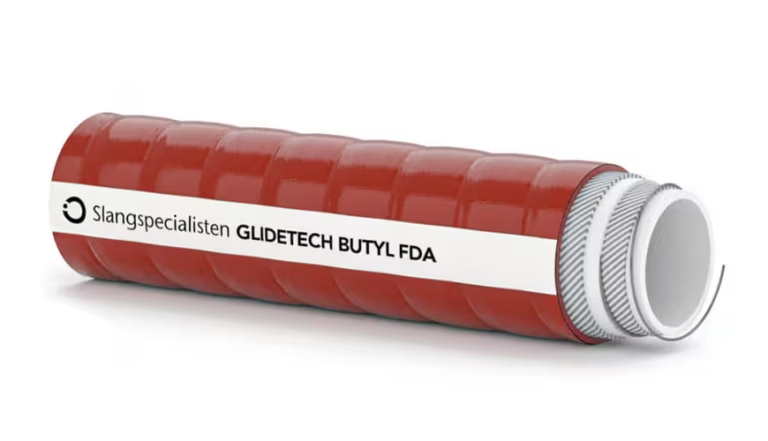
50% discount on select sizes
7
variaties
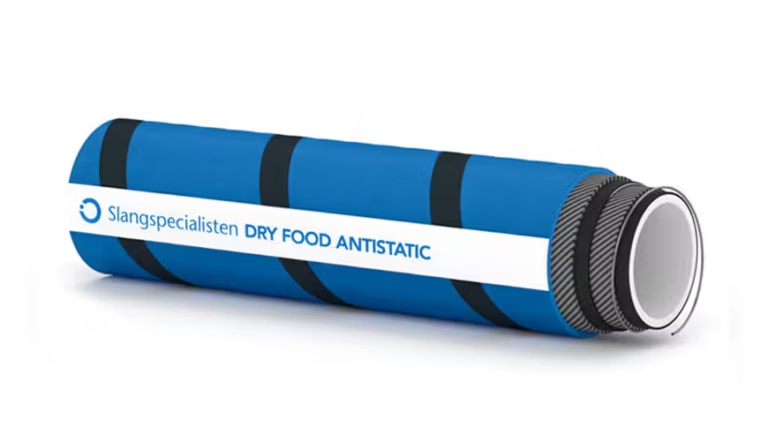
Suction and pressure hose suitable for powdered and granular dry feed products.
3
variaties