
Electric Diaphragm Pumps: What Sets Cognito® Apart from Traditional Compressed-Air-Driven Diaphragm Pumps?
By Morgan Malm
When back pressure increases or the viscosity of the fluid changes, the pump’s flow rate can be affected. In the mining, paint manufacturing, and pulp and paper industries, this can lead to more adjustments and disruptions in production, as well as reduced flow rates.
Electric diaphragm pumps can provide a more predictable flow under varying operating conditions. But how does this technology differ from air-powered diaphragm pumps, and what does Cognito’s design mean for performance, maintenance, and operational reliability?
From Compressed Air to Electric Power: How the Technology Works
Electric and pneumatic diaphragm pumps operate on the same basic principle. The diaphragms move back and forth, alternately creating suction and pressure that move the fluid through the pump. The difference lies in how the diaphragms are driven.
In air-operated diaphragm pump uses compressed air. One electric diaphragm pump Instead, it uses an electric motor that, via an eccentric mechanism, drives the diaphragm shaft back and forth.
Electric or Pneumatic Diaphragm Pumps: What Do the Differences Mean for Your Production?
As back pressure increases, the flow rate in a pneumatic diaphragm pump normally decreases. An electric diaphragm pump with speed control, on the other hand, can maintain a more consistent flow rate when back pressure changes, as long as it operates within its capacity limits.
In industries such as paint manufacturing and mining, where operating conditions can vary, this can result in fewer manual adjustments and more predictable operations.
Electric Diaphragm Pumps may therefore be a suitable alternative when the process requires a steady flow or when you want to reduce energy losses associated with compressed air systems.
Compressed-Air-Driven Diaphragm Pumps However, it may be suitable for facilities where compressed air is already available or where simple flow control is a priority.
The process requirements for flow, pressure, energy consumption, and operating environment determine which technology is best suited.
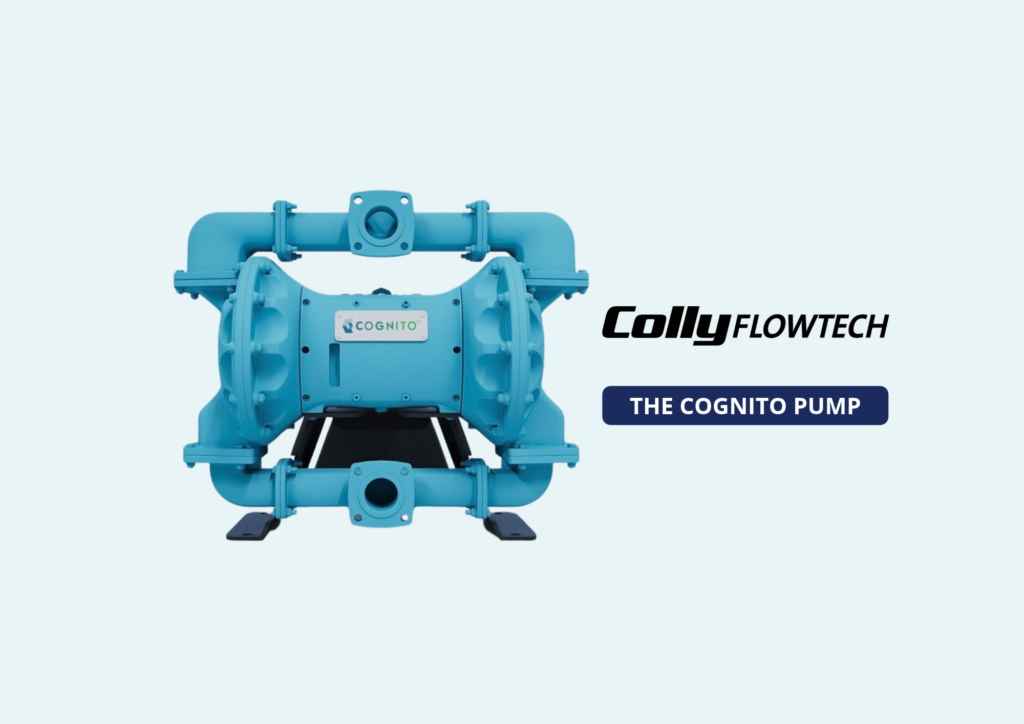
Cognito: An electric diaphragm pump for demanding processes
Cognito features a mechanism and diaphragm design with a shorter stroke, which reduces the diaphragm's movement with each stroke and limits mechanical stress.
This helps extend maintenance intervals and reduce the number of membrane replacements, depending on operating conditions.
Cognito’s metal pumps come standard with acid-resistant steel ball seals, which are replaceable—a major advantage when pumping abrasive media such as slurry and contaminated abrasive liquids. The design minimizes wear in applications where the pump is subjected to high levels of wear.
Another distinguishing feature is the series’ wide capacity range. Cognito is available in sizes from DN25 to DN100 (1–4 inches), with flow rates up to 800 liters per minute and a maximum working pressure of 8 bar. This capacity range makes the series suitable even for larger industrial pumping applications.
The pumps are available in both plastic and metal versions, so that the material can be selected based on the chemical properties of the fluid and the requirements of the process.
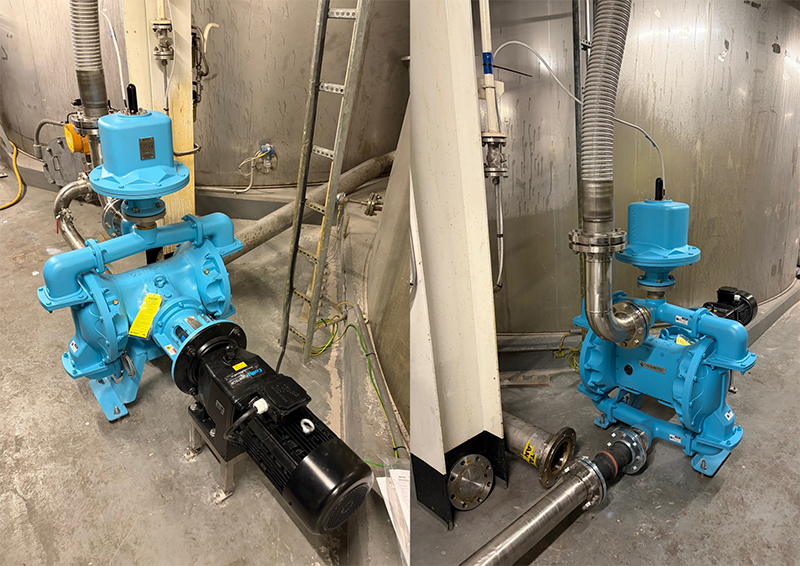
Is Cognito the right pump for your process?
Cognito can be used to transport everything from viscous process fluids to chemicals and media containing solid particles.
Some examples include:
- The Paper and Pulp Industry: Pumping of starch, adhesives, and other process fluids where viscosity may vary.
- The Paint and Binder Industry: Transport of paint, latex, and binders where a controlled flow is important.
- The Mining Industry: Pumping of slurry and liquids containing particles that require high wear resistance.
- Chemical industry: Transportation of chemicals and solvents where material compatibility and chemical resistance are critical.
- Ceramic manufacturing: Handling of abrasive suspensions and other media containing particles, in which the pump's components are subjected to mechanical wear.
Common applications include transferring between tanks, circulation in production processes, loading tanker trucks, and pumping from pump pits.
What do you need to keep in mind when installing an electric diaphragm pump?
An air-powered diaphragm pump normally stops when the back pressure equals the drive pressure. An electric diaphragm pump, on the other hand, continues to operate even if the outlet is closed. Therefore, you need to ensure that the pump has an overpressure protection device to prevent damage to the equipment.
With the right pressure monitoring, control, and overpressure protection, you can ensure safe operation. When sizing the pump, you also need to take into account the desired flow rate, back pressure, and the properties of the fluid.
Is an electric diaphragm pump right for your process?
Would you like to reduce your reliance on compressed air or explore whether an electric diaphragm pump could improve your pumping operations? Morgan Malm can help you evaluate Cognito based on your process’s requirements for flow, pressure, and fluid properties.
You might also be interested in:







Do you have any questions?
