
Which Filter Membrane Is Right for What? A Guide to PES, PVDF, PTFE, PP, and Nylon
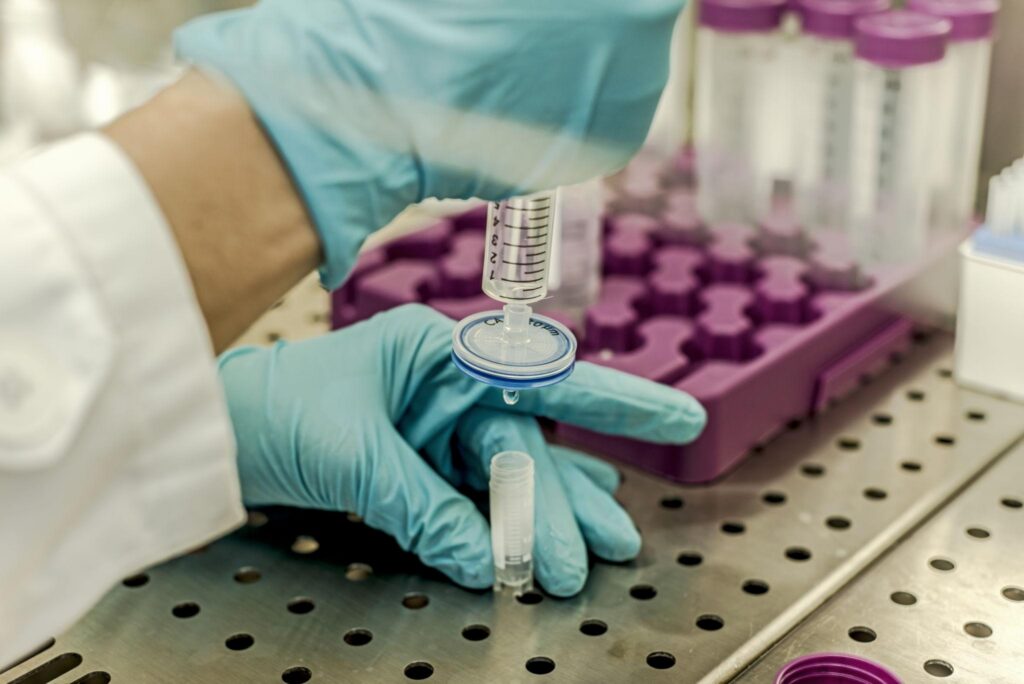
A filter membrane that works well for a water-based solution is not necessarily the best choice for a sample containing proteins or organic solvents. For example, choosing the wrong membrane can cause substances to become trapped on the membrane or the material to be incompatible with the liquid being filtered.
For those of you who work as laboratory engineers, process engineers, product developers, or in quality control, it is therefore important to understand the differences. Here, we compare five common membrane materials, their properties, and their applications.
What factors influence the choice of filter membrane?
When selecting a filter membrane, you need to consider both the types of particles to be removed and how the membrane interacts with the fluid.
Four characteristics are particularly important:
- Flow rate: The rate at which the fluid passes through the membrane depends, among other things, on the material, pore size, pressure, temperature, and the properties of the fluid.
- Chemical resistance: The membrane must be able to withstand the liquid and the chemicals used without adversely affecting the filtration process.
- Hydrophilic and hydrophobic properties: Hydrophilic membranes are easily wetted by water, while hydrophobic membranes are water-repellent. This affects how easily water-based liquids can pass through the membrane and whether pre-wetting is necessary.
- Protein binding: Some membranes bind proteins to their surface, which can result in some of the protein being lost during the filtration of biological samples.
Five Common Filter Materials and Their Properties
PES – polyethersulfone
PES is a hydrophilic membrane material that often exhibits high fluid flow and low protein binding. This makes the material suitable for filtering water-based and biological solutions, such as cell culture media and protein solutions, where the goal is to minimize protein loss.
Things to keep in mind: PES is not compatible with all organic solvents. Therefore, always check the material's chemical resistance.
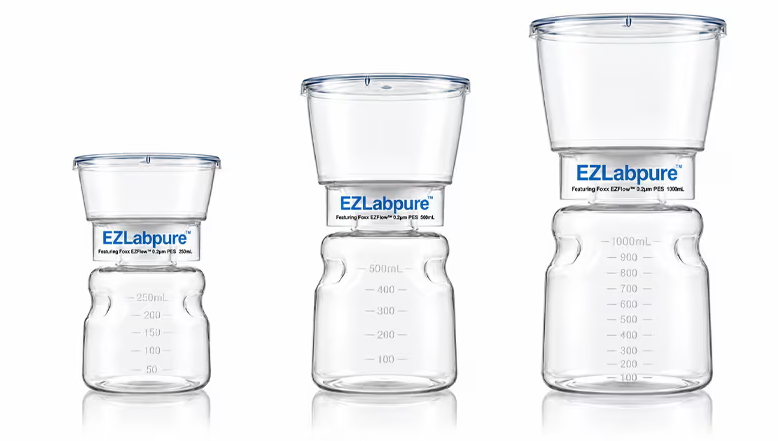
Examples from our product line: EZLabpure™ From our supplier, Foxx Life Sciences, this is a sterile vacuum filtration unit with a PES membrane designed for use with, among other things, cell culture media and buffer solutions.
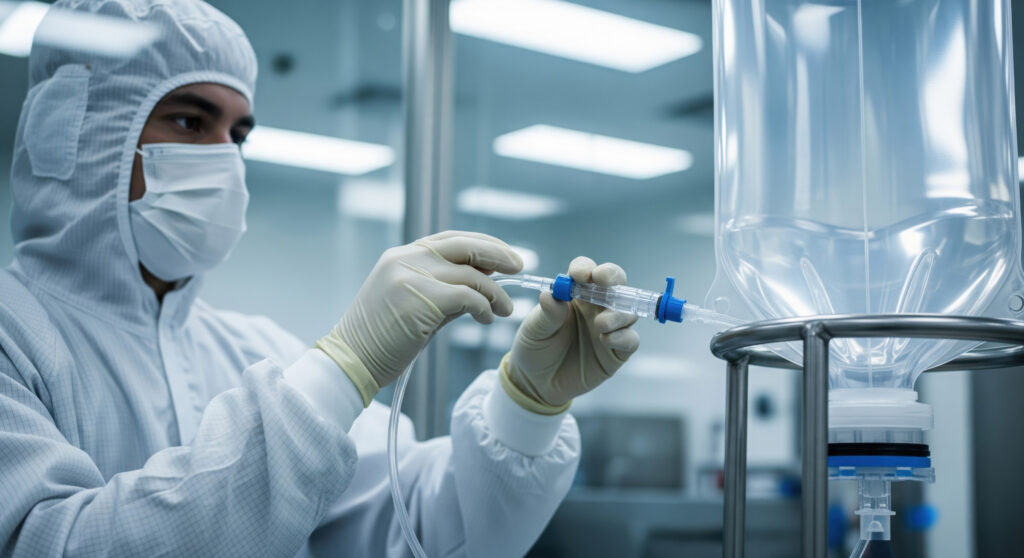
For process filtration, we also offer PROPOR HC From Parker Hannifin, a sterilizing membrane filter with a PES membrane and an integrated pre-filtration layer that provides high capacity even with process fluids that are more difficult to filter.
PVDF – polyvinylidene fluoride
PVDF combines good chemical resistance with high mechanical strength and is available in both hydrophilic and hydrophobic versions.
Hydrophilic PVDF membranes can have low protein binding and are used, among other things, for the filtration of biological samples, protein solutions, and pharmaceutical process fluids.
Things to keep in mind: The properties of PVDF membranes vary depending on the specific type. Therefore, check both whether the membrane is hydrophilic or hydrophobic and which chemicals it can withstand.
Examples from our product line: Corevital SND From our supplier Cobetter, this is a sterilizing membrane filter with a hydrophilic PVDF membrane and low protein binding. The filter is designed for the filtration of biological and pharmaceutical process fluids where high product recovery and microbiological control are critical.
PTFE – polytetrafluoroethylene
PTFE has excellent chemical resistance and is used for filtering many organic solvents, chemically aggressive liquids, as well as air and gases.
The material is naturally hydrophobic. For water-based solutions, therefore, pre-wetting or a hydrophilic PTFE membrane may be required.
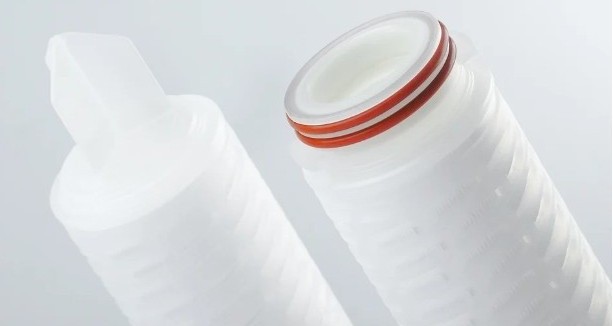
Examples from our product line: TETPOR PLUS from Parker Hannifin is a PTFE-based membrane filter with excellent chemical resistance. It is used, among other things, for sterile filtration of gases and in chemically demanding applications.
PP – polypropylene
Polypropylene is a chemical-resistant and cost-effective material used in many different types of filtration. It is particularly common in filter cartridges for prefiltration and particle filtration of water, chemicals, and industrial process fluids.
PP is naturally hydrophobic and has good resistance to many acids, bases, and other chemicals. However, its compatibility with organic solvents varies depending on concentration and temperature.
Things to keep in mind: PP is often used in depth filters, such as meltblown and pleated filter cartridges, but is also found in membrane designs. It is therefore important to distinguish between a PP membrane and a standard polypropylene particle filter.
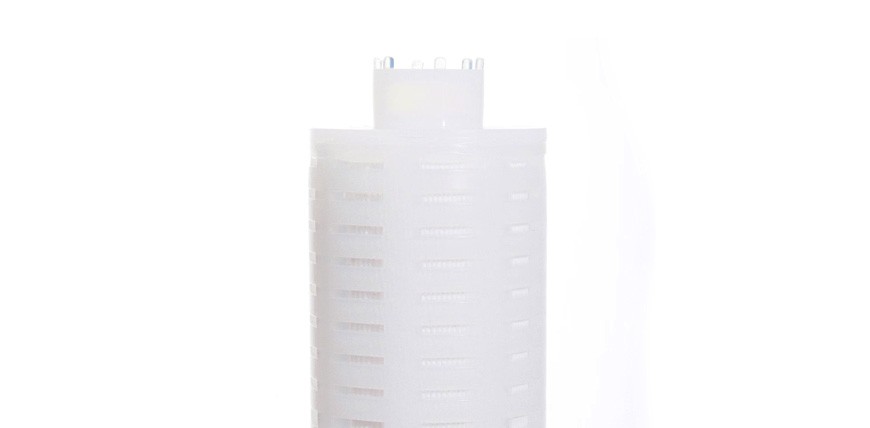
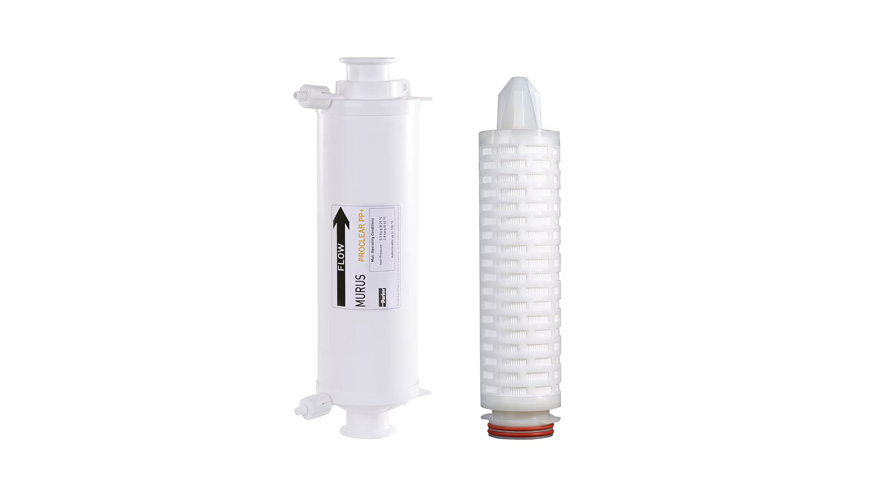
Examples from our product line: PROPLEAT PP from Parker Hannifin is a pleated polypropylene filter cartridge used for particle filtration and clarity filtration of process fluids. Its design combines a large filter area with good dirt-holding capacity and broad chemical compatibility.
Nylon – polyamide
Nylon is a mechanically strong membrane material that is compatible with many water-based solutions and organic solvents. It is used, among other things, in HPLC sample preparation and routine quality control.
Nylon can bind more protein than, for example, PES, and is therefore less suitable for certain protein-sensitive samples. The material is also less suitable for certain highly acidic solutions.
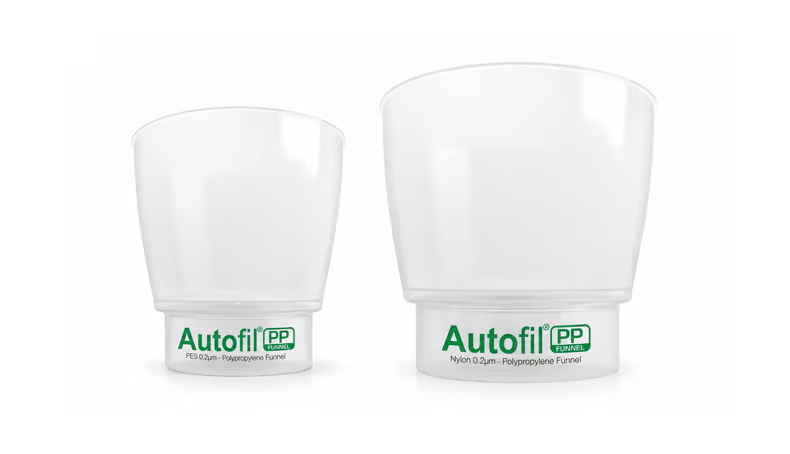
Examples from our product line: Autofil® Foxx Life Sciences' product line includes, among other things, vacuum filter funnels with nylon membranes for laboratory filtration and sample preparation.
Comparison of PES, PVDF, PTFE, PP, and Nylon
| Material | Distinctive Features | Restriction |
| PES | Hydrophilic, often high flow and low protein binding | Not compatible with all organic solvents |
| PVDF | Good chemical resistance; available in hydrophilic and hydrophobic versions | The properties vary among different membranes |
| PTFE | Very good chemical resistance, normally hydrophobic | Hydrophobic variants typically need to be pre-wetted for water-based solutions |
| PP | Good chemical resistance, cost-effective, and typically hydrophobic | Many PP filters are depth filters rather than membrane filters. Chemical compatibility must be verified. |
| nylon | Compatible with many common solvents | Can bind to proteins and is less suitable for certain acids |
The table provides a general comparison. The properties may vary between different products, even when they are made of the same material.
Do you need help choosing the right filter membrane?
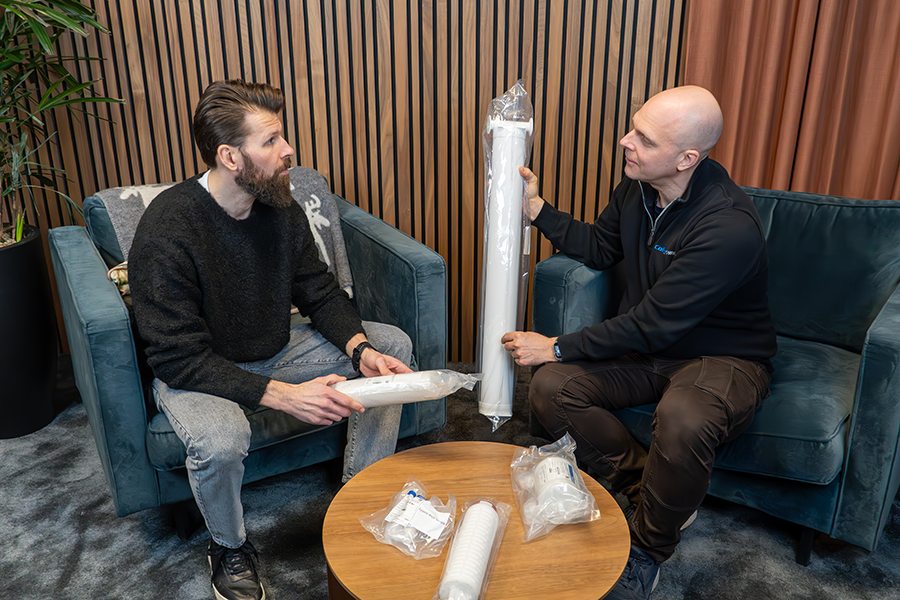
Our specialist, Patrik Andersson, will help you evaluate requirements, documentation, and technical conditions to find the right filter solution.
Frequently Asked Questions About Filter Membranes
Which filter membrane is best for filtering protein solutions?
PES and PVDF hydrofilters are often suitable options for filtering protein solutions because they generally have low protein binding. This reduces the risk of proteins becoming trapped on the membrane and being lost during filtration. The choice also depends on the composition of the solution and the requirements for the filtration process.
What is the difference between hydrophilic and hydrophobic filter membranes?
Hydrophilic filter membranes are easily wetted by water and are therefore suitable for filtering water-based solutions. Hydrophobic membranes, on the other hand, repel water and are often used for filtering gases or certain organic solvents. When filtering water-based liquids, hydrophobic membranes may need to be pre-wetted.
Which filter membrane should be used for organic solvents?
PTFE is often a suitable option because the material has excellent chemical resistance and can withstand many organic solvents. Nylon and certain PVDF membranes can also be used, depending on the solvent and concentration. Always check the membrane’s chemical compatibility before use.
What is the difference between PES and PVDF?
Both PES and hydrophilic PVDF are used for filtering biological and water-based solutions. PES is often characterized by high fluid flow and low protein binding, while PVDF combines good chemical resistance with high mechanical strength. PVDF is also available in both hydrophilic and hydrophobic versions.
How do you choose the right pore size for a filter membrane?
The choice of pore size depends on which particles or microorganisms are to be removed and the requirements for the filtration process. For many sterile filtration applications, membranes with a nominal pore size of 0.2 or 0.22 µm are used, while larger pore sizes can be used for particle filtration. The membrane material, flow capacity, and the product’s validated separation performance must also be taken into account.
You might also be interested in:



Do you have any questions?
