
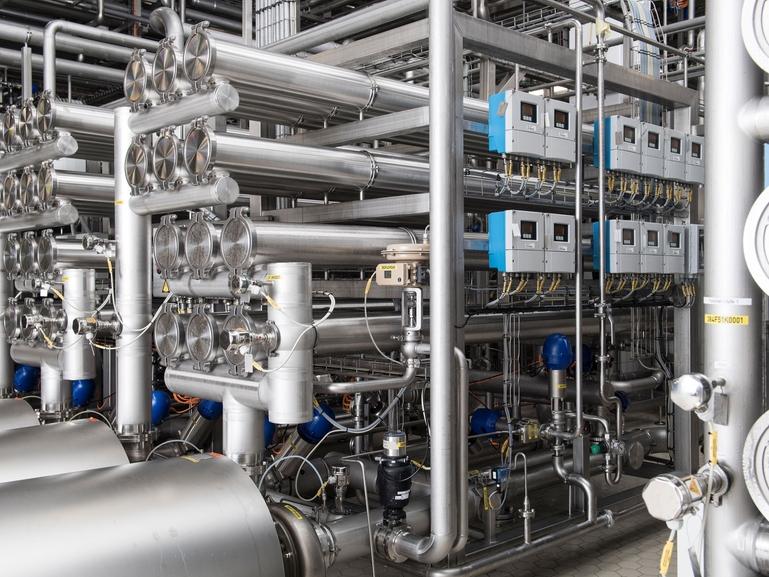
Pressure-driven membrane filtration is a physical separation method used to separate particles, molecules, and dissolved substances based on factors such as size and chemical properties. The technology is used in industries such as food, pharmaceuticals, and water treatment to purify and concentrate liquids.
The right membrane technology can help you streamline your process, reduce product losses, and achieve more consistent product quality. But how do you know which technology is best suited for your needs? In this article, we’ll explain how membrane filtration works, what methods are available, and when they’re used.
What is a membrane?
A membrane acts as a thin filter that allows certain substances to pass through while retaining others. Depending on the membrane’s structure, material, and surface properties, it can separate everything from larger particles and microorganisms to very small dissolved substances.
How does pressure-driven membrane filtration work?
In pressure-driven membrane filtration, a pressure difference is created across the membrane, also known as transmembrane pressure (TMP). This pressure difference drives the fluid through the membrane, allowing some substances to pass through while others are retained.
Two important concepts in membrane filtration are:
- Permeate: The fluid that passes through the membrane.
- Exam: The portion of the fluid that does not pass through the membrane, where separated substances can become concentrated. In dead-end filtration, however, separated particles often accumulate on the surface of the membrane.
Four Common Types of Pressure-Driven Membrane Filtration
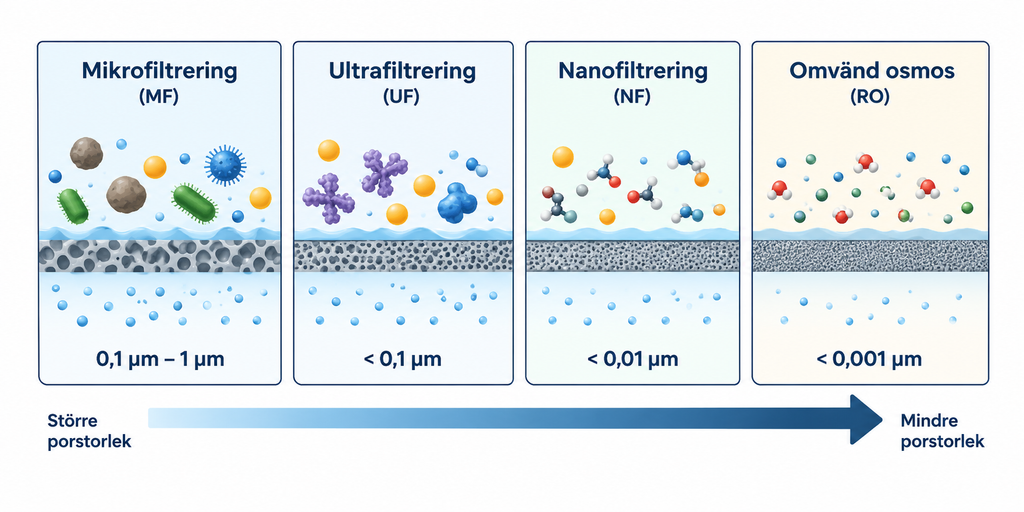
Pressure-driven membrane filtration is generally classified into four main types. They differ in terms of the substances they can separate and the pressure levels typically used
- Microfiltration (MF): Used to remove larger particles, suspended solids, and many microorganisms.
- Ultrafiltration (UF): Used to separate smaller particles and larger molecules, such as proteins.
- Nanofiltration (NF): It can separate small organic molecules and certain dissolved salts. In addition to molecular size, electrical charge can also affect the separation.
- Reverse osmosis (RO): Used to remove a very large proportion of dissolved salts and other small substances, for example, in water treatment. The separation occurs primarily through the transport of substances through a dense membrane layer, rather than through conventional particle filtration.
The most suitable technology depends on the composition of the liquid, the substances to be separated, and the requirements for the final product.
Cross-flow filtration and dead-end filtration: What's the difference?
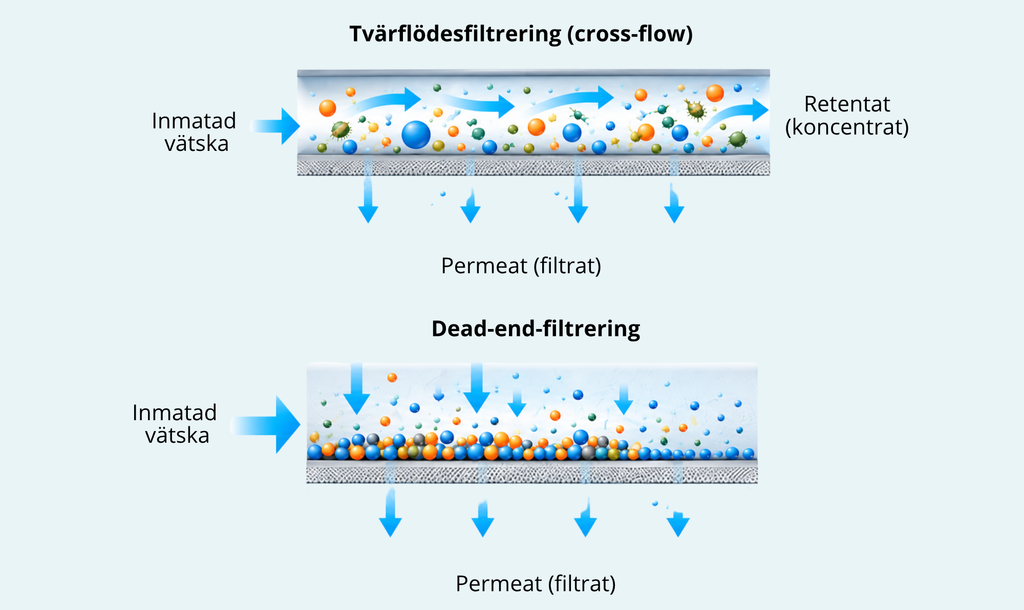
In addition to the choice of membrane technology, the way the fluid flows relative to the membrane is also important. Two common filtration methods are cross-flow filtration and dead-end filtration.
Cross-flow filtration
In cross-flow filtration, the fluid flows along the surface of the membrane, while some of it passes through the membrane. The flow helps remove separated substances and limits buildup on the membrane surface, which can reduce the risk of clogging.
This method is particularly well-suited for liquids with a high particle content and for processes that require continuous filtration.
Dead-end filtering
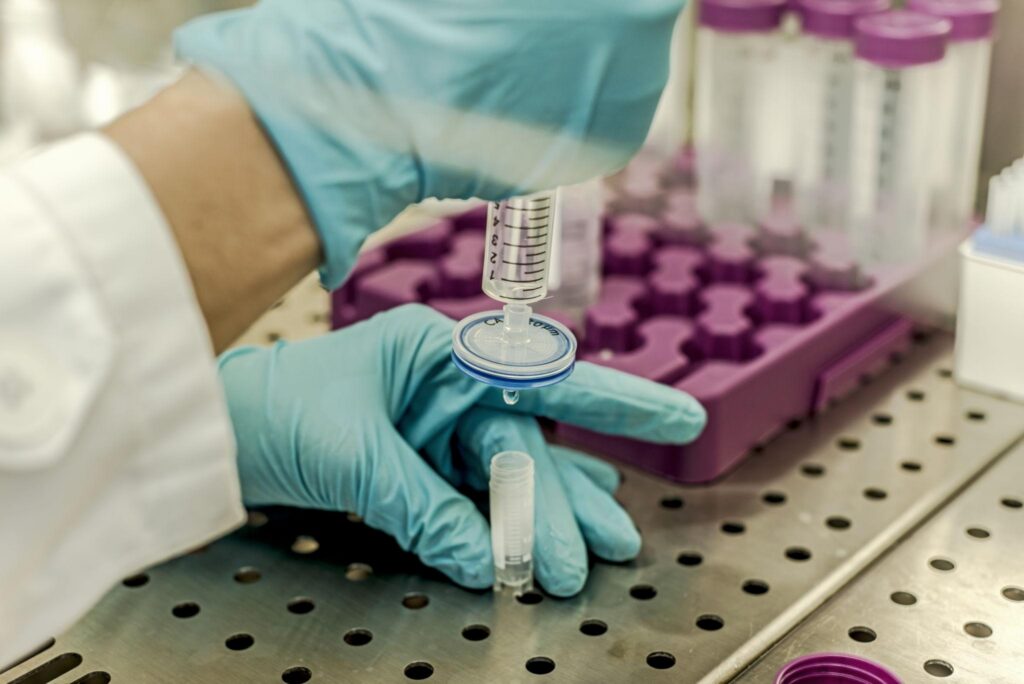
In dead-end filtration, the fluid is forced straight through the membrane. Particles that do not pass through accumulate on the membrane's surface, which over time can lead to clogging and reduced flow.
This method often involves a simpler system design than cross-flow filtration and is particularly well-suited for liquids with low particle content, such as in final filtration.
Where is membrane filtration used?
Membrane filtration is used in several industries where liquids need to be purified, separated, or concentrated.
- The food industry: For example, to concentrate milk proteins and clarify beverages. This technology can enable separation at lower temperatures, which is an advantage for heat-sensitive products.
- The Pharmaceutical and Biotechnology Industry: For purifying and concentrating process fluids and biological products where high standards of purity and product quality are required.
- Water Treatment: To remove particles, microorganisms, and certain dissolved substances, thereby improving water quality.
Why does the material of the diaphragm matter?
In membrane filtration, the material of the membrane affects which liquids it can be used with and how it performs under different process conditions. For example, some materials are more resistant to strong chemicals, while others are better suited for water-based solutions.
Common membrane materials include PES, PVDF, PTFE, PP, and nylon. The most suitable material depends on the properties of the fluid and the filtration requirements.
Would you like to learn more about the differences? Read our guide Which Filter Membrane Is Right for What? A Guide to PES, PVDF, PTFE, PP, and Nylon.
Do you need help choosing the right membrane filtration system?
At Colly Flowtech, we partner with leading suppliers and help our customers find membrane solutions tailored to their processes. Do you have any questions or would you like to discuss which solution is right for your business? Contact Patrik Andersson, and he’ll be happy to assist you.

Frequently Asked Questions About Membrane Filtration
What is membrane filtration?
Membrane filtration is a separation method in which a membrane is used to separate particles, molecules, and dissolved substances from a liquid. The technology is used, among other things, for purification, concentration, and separation in various industries.
What is the difference between microfiltration and ultrafiltration?
Microfiltration is primarily used to remove larger particles and many microorganisms. Ultrafiltration can also remove smaller particles and larger molecules, such as proteins.
What is the difference between cross-flow filtration and dead-end filtration?
In cross-flow filtration, the fluid flows along the surface of the membrane, which helps limit clogging. In dead-end filtration, the fluid passes straight through the membrane, and the separated particles accumulate on the surface.
In which industries is membrane filtration used?
Membrane filtration is used in a variety of industries, including the food, pharmaceutical, and biotechnology sectors, as well as in water treatment. The technology is used to purify, separate, and concentrate liquids.
How do you choose the right membrane filtration technology?
The choice depends on the composition of the liquid, the substances to be separated, and the required degree of purity. The membrane material, chemical resistance, and operating conditions of the process also influence the choice.
You might also be interested in:



Do you have any questions?
