Is your pump harming cells? How pump choice affects the perfusion process

Perfusion has become an established method for achieving high productivity and high cell densities in modern bioprocesses. But amidst all the focus on filter selection, media optimization and advanced bioreactor control systems, it is easy to forget one of the most critical components of the system: the pump.
In a perfusion process, it's all about keeping cells alive and productive for a long time. Therefore, the choice of pump makes a much bigger difference to the end result than many people realize.
The challenge: The pump that damages your cells
Traditionally, peristaltic pumps (tube pumps) have been the standard in perfusion systems. They are well known and easy to use, but also involve higher shear stresses on the cells.
When the rollers (wheels) inside the pump itself compress the hose to push the liquid forward, the cells are subjected to mechanical stress, which can lead to:
- Cell damage and lysis: Cell walls break down.
- Impaired cell viability: Fewer living cells that can produce.
- Lower product yield: reduced production over time.
The mechanical wear on the hose also poses the risk of particle release (spallation), pressure drop and, in the worst case, hose rupture. The pump thus becomes a critical component for both process stability and product quality.
The solution: Contactless pump technology with Levitronix MagLev
Our long-term partner Levitronix builds its pumps on magnetic levitation (MagLev). The impeller floats contactlessly in a magnetic field, which means that no internal components come into mechanical contact during operation.
The result is a pumping solution that transports the cells with very low mechanical impact and high process control.
For perfusion processes, this brings several tangible benefits that contribute to higher productivity, better process stability and reduced risk of downtime:
1. Low shear force for high cell viability
The open flow area and non-contact design reduce mechanical stress on the cells. Since the fluid is not compressed and no internal contact points create friction, the cells can pass through the pump with minimal impact.
Studies show that cell viability can be maintained above 95% during long runs, while peristaltic pumps often show higher losses under similar conditions.

2. Stable flow for better process control
Levitronix pumps deliver a pulsation-free flow that contributes to:
- Smoother process control
- Stable transmembrane pressure (TMP) across the filter
- Predictable performance over time
In addition, in combination with external sensors, the system can automatically regulate and maintain a constant pressure or flow, even when fluid properties or filter conditions change.
3. reduced risk of downtime
Since no components are exposed to mechanical contact or friction, wear in the pump is minimized. The lack of tubing compression also eliminates a common source of failure in perfusion systems and reduces the risk of tubing breakage and unwanted pressure build-up.
The result is a robust and reliable solution with a long lifetime, even in continuous operation.
Quick comparison: MagLev vs. Peristaltic pumps
| Function | Peristaltic pumps (Hose pumps) | Levitronix MagLev pumps |
| Mechanical stress | High (compression and shear forces) | Extremely low (hydrodynamically optimized) |
| Flow character | Pulsating (often requires dampers) | Completely pulsation-free |
| Wear & Risk | Risk of hose rupture and particle release | Minimal risk, no mechanical contact surfaces |
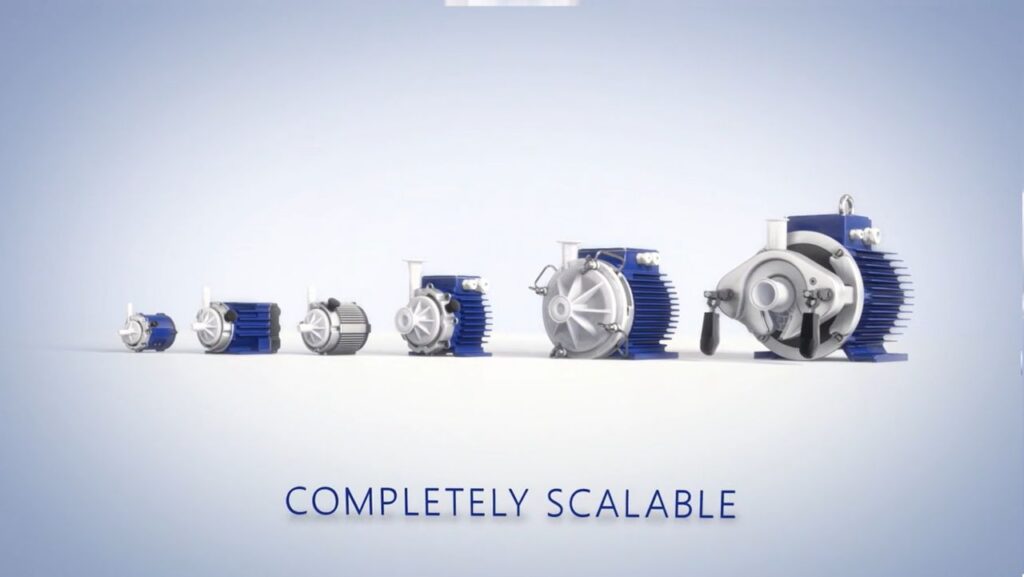
| Process scalability | Limited at high flows/pressures | Very high and predictable |

What does this mean for your bioprocess?
Choosing the right pump is not just about moving a liquid from point A to point B. In a perfusion application, pump technology affects everything from cell viability and product quality to process stability and reliability.
With MagLev technology you can:
- Protect cells by minimizing mechanical impact
- Ensuring a stable and pulsation-free flow
- Reduce wear and tear and the risk of unplanned downtime
- Create better conditions for consistent performance over time
When every percentage point in cell viability and yield counts, the right pumping technology can make a big difference to the outcome of the process.
Want to know more about how Levitronix can optimize your perfusion process? We are happy to help you evaluate your application and find the right solution for your needs. Contact me Viktor Fredriksson (viktor.fredriksson@colly.se) and I will help you further.
References
About Levitronix
Levitronix is a world leader in magnetic levitation, bearingless motors and a pioneer in advanced process technology for microelectronics, life science and industry. Through its patented technology, the motor and magnetic bearing are integrated into one unit, enabling non-contact, wear-free operation.
The company's product portfolio, which includes pumps, mixers and flowmeters, is designed for maximum precision and reliability in demanding environments. With headquarters in Zurich and global facilities, Levitronix combines technical excellence with local presence to meet the future needs of innovative process technology.

Do you have any questions?