Overmolding technology in biopharma: Focus on safety and efficiency

In the biopharma industry, safety and efficiency are key factors for success. To achieve these goals, it is crucial to minimize risks and ensure the highest quality throughout the manufacturing process. One technology that has received a lot of attention is overmolding, which offers innovative solutions to meet the industry's high standards of safety and sustainability.
What is overmolding technology?
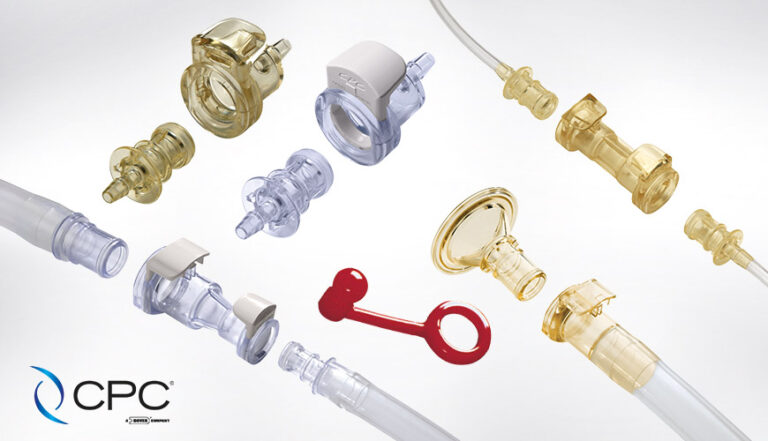
Overmolding creates seamless and leak-proof transitions in single-use hose systems. The process molds transitions and connections together using materials such as silicone or TPE. The result is systems specifically designed to meet the stringent sterility and safety requirements of biopharma.
The benefits of overmolding technology for drug manufacturing and sterility
As demands for sterility and risk minimization increase, the biopharma industry faces new challenges. With the recent update of GMP (Good Manufacturing Practice) Annex 1, the need for robust and safe solutions is becoming increasingly important. Overmolding technology offers several advantages:
- Leak-proof systems: Creating seamless connections in critical applications reduces the number of connections at risk of leakage.
- Maintaining sterility: Overmolding technology removes the risk of compromising the sterile barrier of a single-use system at, for example, a hose connection to a fitting.
- Reduced material use: By using overmolding technology, materials such as couplings and fasteners can be excluded, simplifying system validation.
How overmolding technology improves safety and reduces risks in biopharma
Sterility is a cornerstone of biopharmaceutical production, and any risk of contamination can have major consequences. Overmolding technology helps in several ways:
- Improved safety for sterility: The overmolding process creates a completely closed system, making it almost impossible to contaminate. This is particularly critical in biopharma production, as contamination can cost many millions in product losses and also puts patient safety at risk.
- Mechanical strength: Overmolding technology uses high-quality materials that resist chemicals and mechanical stress effectively. This creates a durable system that can withstand a wide range of liquids and processes such as autoclaving and gamma irradiation.
- Flexibility: Overmolding technology adapts to unique needs and process parameters, making it a flexible solution for different applications.
- Reduce downtime: Overmolding technology is an effective solution that minimizes the risk of downtime caused by leakage or contamination.
- Optimize production: By combining increased safety with shorter process times, overmolding technology helps optimize production. The solution minimizes the risk of contamination and creates long-term cost-effectiveness, making it a smart investment for companies looking to maximize their efficiency.
Sustainability and innovation
In addition to increasing safety and efficiency, overmolding technology also contributes to more sustainable production. Fewer components and reduced material consumption mean that the technology is in line with industry's ambitions to reduce environmental impact.
With a focus on safety, flexibility and durability, overmolding technology continues to revolutionize drug production and ensure the highest standards in biopharma.
This text was written by Viktor Fredriksson (viktor.fredriksson@colly.se), Product Manager at Colly Flowtech.
Kan overmolding vara rätt för ditt single-use-system?
Om du vill minska antalet anslutningar i ett slangsystem kan overmolding vara värt att undersöka. Berätta hur ert system ser ut och vilka krav ni har på material och sterilitet, så hjälper vi dig att bedöma hur tekniken kan användas i just er process.
Prata med oss om overmoldingFrequently asked questions about overmolding
What does overmolding technology mean for single-use systems?
Overmolding is a technique of molding together tubing junctions and connections with materials such as silicone or TPE. In biopharma, this is used to create completely seamless and leak-proof connections in single-use systems, ensuring that fluid pathways remain sterile and intact.
How does overmolding contribute to increased sterility and safety?
The technology creates a completely closed system with no mechanical joints. By eliminating traditional connectors and fasteners, the risk of compromising the sterile barrier is removed. This is crucial to comply with strict regulations such as GMP Annex 1 and to avoid costly contamination that can threaten patient safety.
What materials are used for overmolding in pharmaceutical manufacturing?
Overmolding uses high-quality materials such as silicone or TPE (thermoplastic elastomers). These materials are chosen for their chemical resistance and mechanical strength, allowing the finished systems to withstand both harsh process fluids and sterilization methods such as autoclaving and gamma irradiation.
Can overmolding technology reduce costs and downtime?
Yes, creating more robust and resilient systems minimizes the risk of leaks and downtime. In addition, system validation is simplified as the number of loose components is reduced. This leads to more optimized production and long-term cost efficiency for biopharma companies.
How is overmolding a sustainable choice for industry?
Overmolding contributes to sustainability by reduced material use. As the technology molds parts together, fewer external connections and components are needed. This reduces overall waste and is in line with the biopharma industry's goal to reduce its environmental impact without compromising on quality.
Do you have any questions?

Viktor Fredriksson
Explore our range of Single-Use components