
High Pumping Costs in the Ceramics Industry? Here's How Electric Operation Can Reduce Energy Consumption
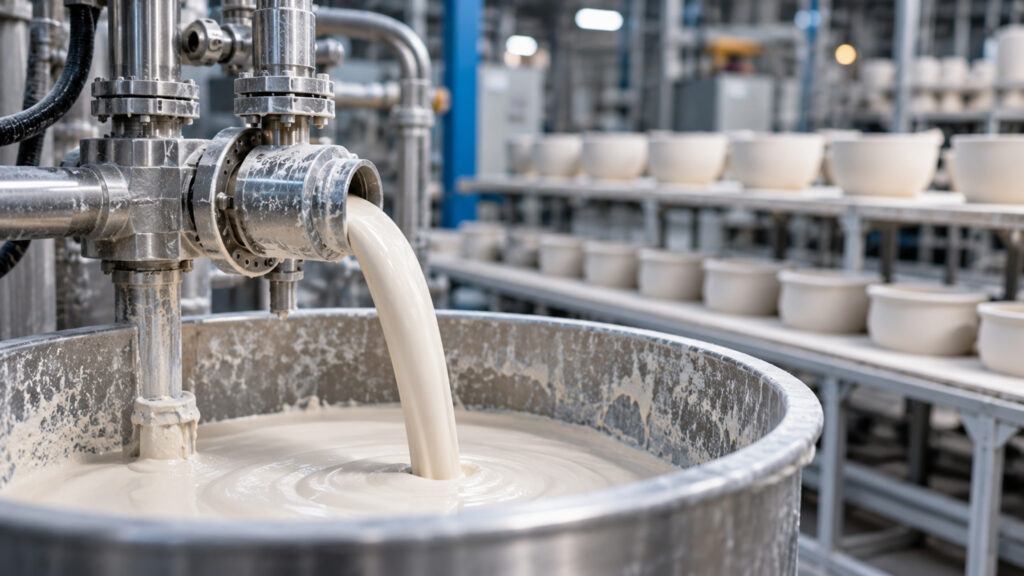
Abrasive ceramic media, long operating times, and high energy costs place significant demands on pumps in the ceramics industry. When maintenance requirements increase and flow rates fluctuate, this can affect both production costs and quality.
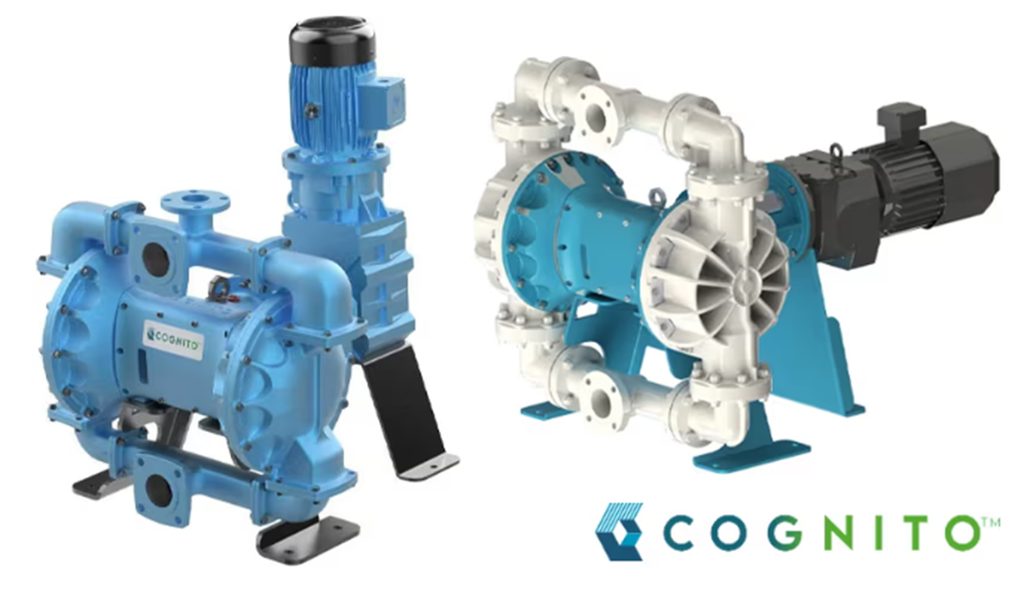
For manufacturers with larger diaphragm pumps that operate for many hours a day, electric operation can be a way to reduce energy consumption. With Cognito EODD, we at Colly Flowtech help manufacturers evaluate the possibilities and find the right pump solution for their production.
Why is pumping so expensive in the ceramics industry?
In the ceramics industry, diaphragm pumps are used, among other things, to transport glaze and ceramic slurry between mixers, storage tanks, and application equipment.
Viscous fluids often contain abrasive particles that affect the service life of pump components. When parts need to be replaced, maintenance is required, which can disrupt production. Furthermore, if the pump flow varies, glaze application can become uneven, which risks affecting the quality of the final product and leading to more waste or rework.
In addition to wear and tear, energy consumption is a significant component of the pump’s total operating cost. For facilities with several large diaphragm pumps that operate for long periods, it may therefore be worthwhile to review how the pumps are operated.
How does the pump's operating mode affect energy consumption?
Compressed-air-driven diaphragm pumps are used in many industrial applications and are a good choice when process conditions make compressed-air operation suitable. They feature a simple and robust design, can handle demanding media, and are particularly well-suited for environments where compressed air is already available.
At the same time, the production process requires energy to generate compressed air. First, electricity is used to compress the air, which is then transported through the plant’s piping system before it drives the pump; this is typically expensive. Energy losses occur during the process, including in the form of heat, pressure drops, and potential leaks.
With electric operation, you avoid these losses associated with the compressed air supply. For larger pumps with long operating times, this can make a significant difference in energy costs.
When choosing pumps used in the ceramics industry It is therefore important to evaluate energy consumption, operating conditions, and maintenance. The most suitable operating mode depends on the process requirements, existing equipment, and how the pump is used.
Cognito EODD – Electric Drive for Demanding Ceramic Media
Cognito EODD is designed for demanding pumping applications where abrasive particles, high viscosity, and long operating times place heavy demands on the equipment.
The electric diaphragm pump combines the advantages of traditional diaphragm pump technology—such as self-priming capability, resistance to dry running, and a design without mechanical shaft seals—with energy-efficient electric operation.
Cognito can be used for the transfer and recirculation of, for example, slip, glaze, and ceramic slurry, provided the pump is properly sized for the medium and the process.
At Colly Flowtech, we help you select the right pump size and material based on the properties of the fluid and your production requirements.
Learn more about Cognito EODD and its technical features on our product page.
Here's How Cognito Can Reduce Costs and Improve Production
1. Reduce energy costs for pump operation by up to 75%
Replacing compressed air with electric power reduces the energy losses associated with driving the pump.
According to the supplier, the Cognito EODD can reduce energy costs by up to 75 percent—and in some cases even more—compared with equivalent compressed-air-driven diaphragm pumps.
For facilities with several large pumps that operate for many hours a day, there is therefore significant potential for savings. The size of the savings depends, among other things, on pump size, operating time, and actual energy costs.
2. Less maintenance and fewer unplanned outages
When pumps need to be repaired or components replaced, it can affect the entire production flow. For pumps used in the ceramics industry, which often handle abrasive media, design and material selection are therefore particularly important.
Cognito's design does not include mechanical shaft seals, which eliminates a potential source of leakage and maintenance. The pump can also run dry, which reduces the risk of damage if a tank is temporarily emptied.
Diaphragms and valves still need to be inspected and replaced as needed, but the design can help reduce unplanned downtime and lower maintenance costs.
3. Improved flow control and more consistent production quality
When applying glaze, a steady flow is important for achieving an even result.
With Cognito's electric drive, the pump capacity can be adjusted to meet the process's needs. The pump can also be integrated with the plant's control system—such as a PLC—for automated flow control.
This provides better opportunities to adjust the flow, reduce the need for manual adjustments, and limit the risk of quality variations.
That's why you need to calculate the total cost of pumping
The purchase price is only part of the total cost of a pump over its lifetime. To find a cost-effective solution, you also need to take into account energy consumption, replacement parts, maintenance, and any production downtime.
Mikael Hjort, a technical support specialist for diaphragm pumps at Colly Flowtech, explains why it's important to consider the total cost:
“If you have several large compressed-air-driven diaphragm pumps that run for many hours a day, there may be significant savings to be made. But it’s not just about energy consumption. The pump must also be able to handle the fluid and operate reliably over time. That’s why I think you should look at the total cost—from energy and replacement parts to maintenance and potential production downtime.”
Review Your Pump Costs with Colly Flowtech
Would you like to know if electric diaphragm pumps could be a more cost-effective option for your production?
At Colly Flowtech, we help you evaluate your existing pumping solution, assess your process requirements, and determine whether Cognito EODD is a cost-effective option for your business.
Frequently Asked Questions About Pumps in the Ceramics Industry
What type of pump is best suited for the ceramics industry?
Diaphragm pumps, peristaltic pumps, and eccentric screw pumps are examples of pump types that can be used in the ceramics industry. The most suitable pump depends on the medium’s viscosity, particle content, and abrasive properties, as well as the process’s flow and pressure requirements.
Which pump should be used for casting slurry and ceramic slurry?
When pumping floating slurry and ceramic slurry, a pump is needed that can handle viscous media containing solid and abrasive particles. Diaphragm pumps are often a suitable option, provided that the pump’s materials and sizing are adapted to the medium.
How do you pump glaze without affecting its quality?
To ensure even glaze application, it is important to choose a pump with good flow control and adjust the pumping rate according to the glaze’s properties. A stable flow can contribute to more even application and reduce the risk of quality variations.
How can wear and tear on pumps in the ceramics industry be reduced?
By selecting durable materials, adjusting the flow rate, sizing the pump correctly, and performing preventive maintenance, you can reduce wear and extend the service life of the pump components.
How can pumping costs be reduced in the ceramics industry?
By reviewing pump sizing, energy consumption, operating hours, and maintenance requirements, it is possible to identify potential cost savings. In applications with long operating hours, electric diaphragm pumps can be an energy-efficient alternative to air-powered pumps.
You might also be interested in:




Do you have any questions?

Mikael Hjorth
