Knowledge Article
Electro-polishing: how to improve the performance and lifetime of metal components
Do you want metal components that both look great and perform better in service? Then electropolishing is one of the most effective surface treatment methods on the market. By creating a smooth, hygienic and corrosion-resistant surface, it improves function, durability and appearance - making electropolishing particularly valuable for industries with high demands on quality and reliability.
In this blog post, we'll look at what electropolishing is, the tangible benefits it brings, how the process works and how you can benefit from the technology in your business.
What is electro-polishing and why does it matter?
Electric polishing, also known as electrolytic polishing or electrochemical polishing, is a controlled surface treatment process in which a thin layer of metal is removed from the surface of the component. A chemical and electrical reaction dissolves microscopic imperfections and creates a smooth, mirror-like, passive surface.
The result? A metal component that both looks and performs better - with increased hygiene, durability and corrosion resistance as clear effects.
Four benefits of electropolishing and why you should invest in it
Whether you work in food industry, medical technology or manufacturing, provides electropolishing several clear advantages that directly impact your production and profitability. Below are the main reasons why more and more companies are choosing electropolishing:
1. glossy and fine finish
Electro-polishing produces a fine and shiny surface that reduces friction, improves flows and reduces particle build-up. It not only gives a nicer appearance - but also technical benefits in operation.
2. stronger corrosion protection
By removing free iron particles and creating a chrome-rich surface, the component becomes more resistant to rust, chemicals and acids - even in harsh environments. This contributes to a longer lifetime and reduced risk of breakdowns.
3. Higher hygiene and easier cleaning
A clean, non-porous surface makes it harder for bacteria and dirt to adhere. This makes electropolishing an obvious choice in hygiene-sensitive environments such as the pharmaceutical industry and food production, where cleanliness is crucial.
4. Longer life and lower maintenance
Electro-polished components require less maintenance and last longer. This means fewer breakdowns, lower operating costs and better control of life-cycle costs.
How the process works - from roughness to optimal surface
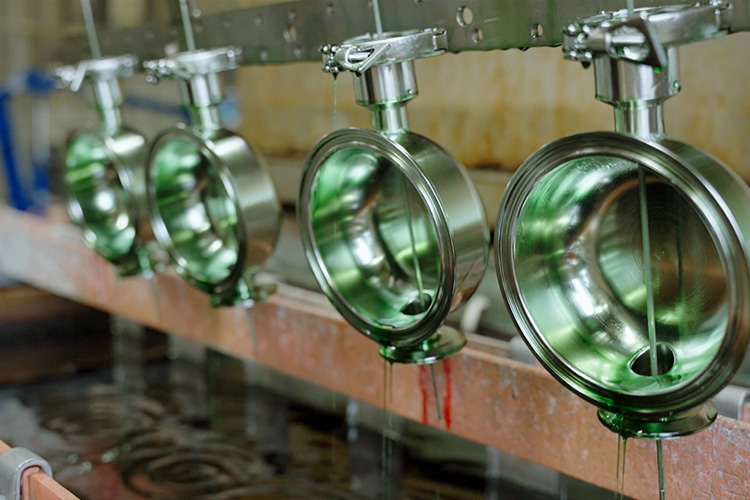
In practice, electropolishing involves immersing the component in an acid bath and connecting it as an anode in an electrical circuit. When the current is switched on, metal is stripped from the surface - but in a way that prioritizes bumps, peaks and microdefects.
The result:
- Bumps and microburrs disappear
- The surface becomes cleaner and shinier
- Improved passivation increases corrosion protection
At the same time, the process is highly repeatable, making it suitable even for complex components or larger series. Electric polishing is therefore often used as an alternative or complement to mechanical polishing - especially when high hygiene standards or corrosion resistance are required.
Electric polishing in action - solutions for demanding industries
This technology makes a real difference in industries where cleanliness, durability and hygienic standards are not choices, but requirements. Below are three clear examples of where electropolishing really makes a difference:
- Medical technology: Components such as surgical instruments, implants and pump parts require extreme cleanliness and biocompatibility. Electropolishing simplifies cleaning, increases traceability and extends service life.
- Food production: In high-hygiene environments, electropolishing helps create clean, pore-free surfaces on pipes, valves and tanks. It reduces bacterial growth, simplifies CIP cleaning and provides safer operation with fewer interruptions.
- Manufacturing industry: Electro-polishing provides molds, machine parts and hydraulic blocks with a durable surface that reduces friction, prevents wear and extends service intervals.


Would you like to improve the surface finish, ease of cleaning, and service life of your components?
At Colly Flowtech, you get more than just a surface treatment. You get a partner who understands your industry’s requirements, works with documented processes, and delivers reliable quality every time. Through custom-designed fixtures and in-depth material expertise, we can ensure consistent quality, whether for individual parts or larger production runs with complex geometries.
Would you like to learn more about how electropolishing can enhance your specific products? Contact us, and we’ll develop a solution tailored to your needs.
Contact us about electro-polishingFrequently asked questions about electro-polishing
What is electro-polishing and how does it work?
Electropolishing is an electrochemical surface treatment method where a thin layer of metal is removed from the surface of a component. By immersing the component in an acid bath and applying current, microscopic irregularities are dissolved. The result is a clean, shiny and passive surface with improved corrosion resistance and easier cleaning.
What materials can be electro-polished?
Electropolishing works best on stainless steels, especially austenitic grades. Other metals such as copper, aluminum and titanium can also be electropolished - but results and methods vary depending on the composition of the material.
How does electro-polishing affect the life of the component?
Electro-polished components last longer thanks to improved corrosion protection and easier cleaning. This reduces maintenance, increases reliability, and minimizes the risk of rust, wear, and bacterial growth - especially in harsh environments.
How do I know if electro-polishing is right for my application?
If your component will be used in environments with high hygiene requirements, risk of corrosion, or if you want to improve cleanability and lifetime, electropolishing is probably the right choice. Please contact us - we will help you analyze your needs and find the right solution.
In which industries is electropolishing most widely used?
Electropolishing is widely used in the food production, medical, pharmaceutical and manufacturing industries. Wherever cleanliness, safety and durability are crucial, electropolishing is a natural choice - for example, on pipes, valves, surgical instruments or machine components.
Do you have any questions?

Jesper Ohlsson
Business Area Manager Stainless Steel
Phone:
+46 72 229 44 49
Email:
jesper.ohlsson@colly.se