Knowledge Article
Hose assembly: A critical and long-term investment for operational safety

Hoses are often one of the smallest components in a process flow - but when something goes wrong, the consequences can be severe. An incorrect or worn hose assembly risks causing contamination, unplanned downtime or, in the worst case, personal injury. Yet hoses are often treated as consumables - rather than as a key component for safety and product quality. Ensuring reliability and traceability in critical flows often starts with the details, and hose assembly is one of the most important.
In this blog post, we look at the factors that determine the quality of a hose assembly, why it is crucial to work preventively, and how proper handling can extend the service life, reduce the risk of breakdowns, and contribute to a safer and more qualitative process.
Four factors that determine the quality of a hose assembly
Sustainable and reliable hose assembly is not just about choosing a hose that seems right for the job. It requires an understanding of how each choice affects the whole - from operating environment and media to service life and maintenance. Through our technical expertise and long experience, we have identified four factors that have a particularly strong impact on hose assembly quality.
- The right slang for the right media: Material compatibility is crucial. The wrong choice of material can lead to chemical degradation, cracking or swelling from within - often without any outward signs until it's too late. A properly matched hose will stand the test of time, even in harsh environments.
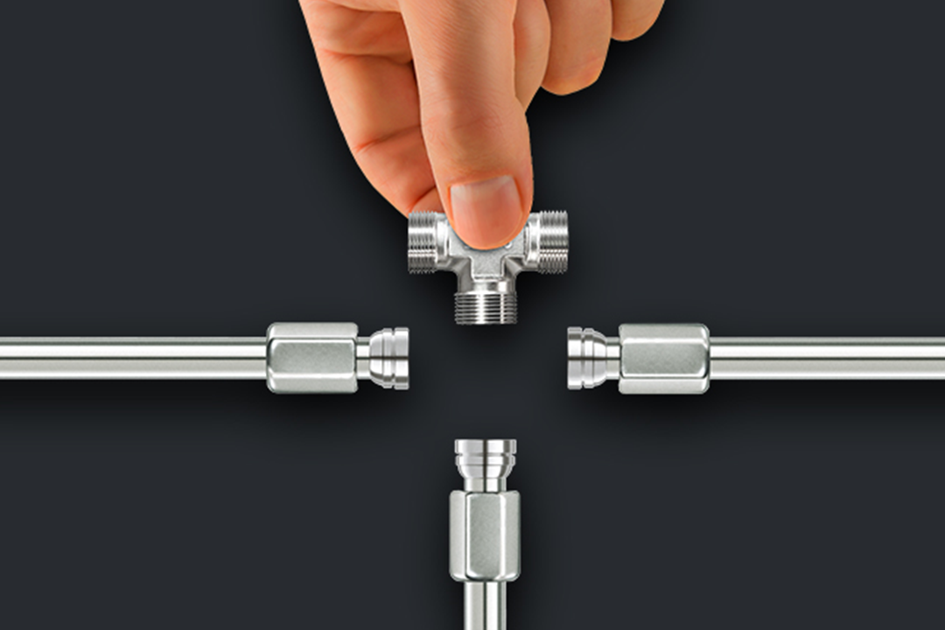
- Correct coupling in the right material and standard: It is not enough that the connection is “stuck”. Mixed metals, wrong surface treatment or wrong connection type can create problems such as micro-leakage or weakened fixings. Analyze each installation based on both technical and environmental conditions.
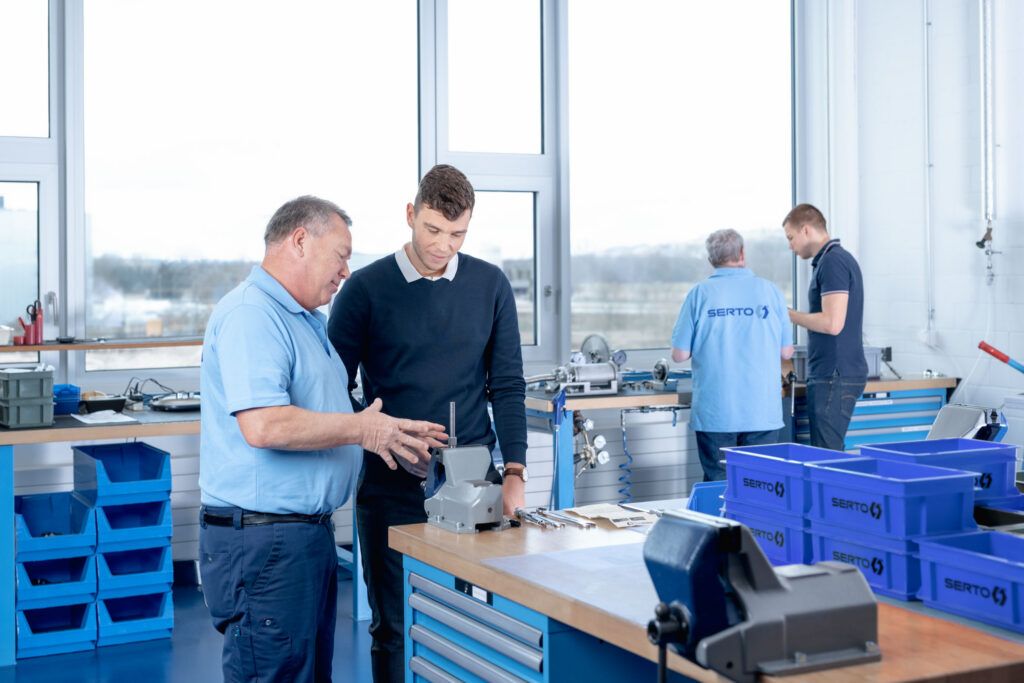
- Professional pressing with the right tools: Pressing that is not carried out with the right tool and method can create internal deformation, leakage or release under load. That's why all our pressing is done in-house - with calibrated tools and quality-assured processes.
- Documentation and traceable labeling: With proper labeling and documentation, it is possible to follow up each assembly, plan maintenance and replacements in a timely manner. This reduces the risk of unplanned stops and creates security in critical flows. All Colly Flowtech's assemblies are pressed in our own premises by trained staff. This means control over every step - and security for the customer.
Proactive hose management - results in practice
Choosing the right hose assembly is an important starting point, but it's not enough to ensure long-term reliability. That's why, working closely with maintenance departments in industry, food, pharmaceuticals and chemicals, we at Colly Flowtech have developed a proactive approach to hose management with clear, measurable results. In practice, this means:
- Identify and prioritize critical assemblies
- Carry out annual hose overhauls
- Monitor labeling, documentation and operating environment
- Replace assemblies as a preventive measure - not after a breakdown
For a Swedish industrial customer, this approach resulted in a 33% increase in the average lifetime of our assemblies, while reducing hose-related downtime by up to 70%. For the customer, this meant both increased production and a safer working environment, without having to compromise on efficiency.
Life span is determined by environment - not by years
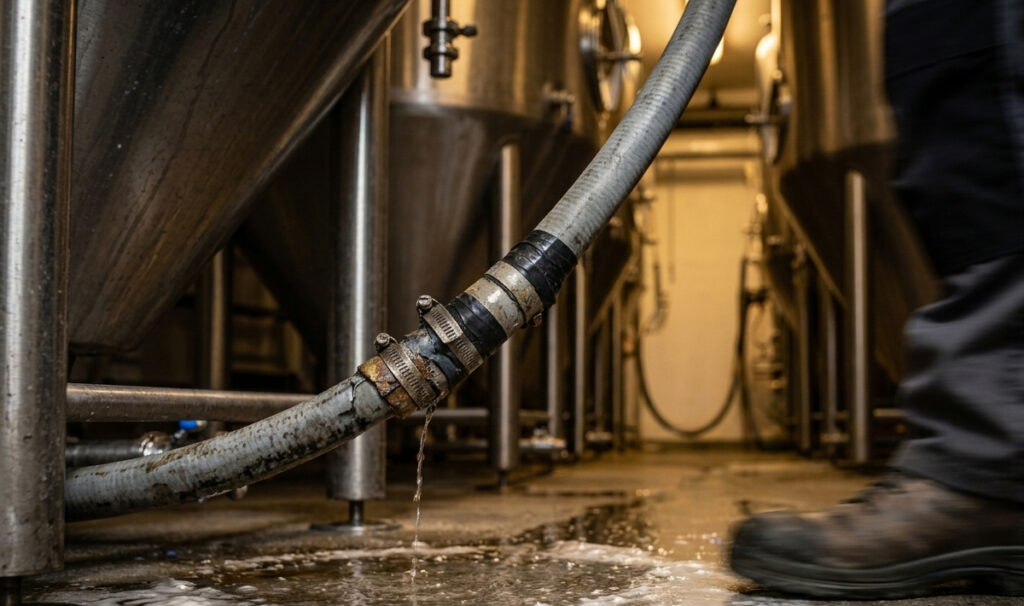
The lifetime of a hose assembly depends entirely on the stresses it is subjected to. UV radiation, chemicals, overpressure, bending and vibrations can significantly shorten the lifespan - even of a hose that looks intact at first glance. That's why we recommend that all assemblies are inspected at least once a year, with a focus on:
- Visible cracks, bubbles or discoloration
- Damage or corrosion to couplings
- Leakage, odor or reduced flow
- Incorrect marking or uncertain identity
- Taped or temporarily repaired hoses
Regular reviews and well-documented intervals not only create better conditions for planning - they also minimize risk and disruption over time.
Hose assembly: A holistic approach for safe and sustainable flows
In an age of increasing demands for traceability, reliability and sustainability, it's often the seemingly simple components that make or break the whole. Hoses may not always take center stage - but their importance for function, hygiene and safety is crucial.
At Colly Flowtech, we therefore offer not just products, but a complete approach: from technical advice and dimensioning to pressing, documentation and proactive review. Our long experience in complex and regulated environments allows us to contribute more than just components, we contribute to a flow that works over time.
This text was written by Tobias Sander (tobias.sander@colly.se), Sales Manager Hoses at Colly Flowtech.
Vill du se över dina slangmontage?
Ett slangmontage behöver fungera som helhet – från val av slang och koppling till pressning och märkning. Vi hjälper dig att ta fram montage som passar din process och att planera översyn av de slangar du redan använder.
Få hjälp med slangmontageDo you have any questions?

Frequently asked questions about hose assembly
What is the lifetime of a hose assembly?
Lifetime varies greatly depending on environment, temperature, pressure and media. In optimal conditions, an assembly can last for years, while harsh process environments may require more frequent replacements.
When should you replace a hose?
Replace the hose as soon as you see signs of cracks, bubbles, discoloration, odor, leaks or damage to fittings. Even taped hoses or unclear labeling signal that it's time for a replacement.
How often should hose assemblies be inspected?
We recommend that you check your hose assemblies at least once a year. If you expose your hose assemblies to high chemical, mechanical or thermal stresses, you should check them more often than once a year. By working with regular reviews, you will reduce the risk of unplanned downtime and create better conditions for planning and maintenance.
How to choose the right hose for media, pressure and temperature?
Choose hose materials that are compatible with the medium and adapted to the pressure, temperature and surrounding environment. A technical review according to the STAMPED principle (Size, Temperature, Application, Media, Pressure, Ends, Delivery) is a good support.
Can I adapt the hose assembly to my equipment?
Yes, hose assembly can be fully customized according to process requirements, environment and coupling types. At Colly Flowtech, we offer everything from material selection to labeling and crimping - customized for your specific application.