When selecting a hose for an industrial application, pressure is one of the most important parameters to consider. Two terms that frequently appear in product data are working pressure and burst pressure. But what do they actually mean—and how do they affect your choice of slang?
Understanding the difference is important for selecting a hose that will perform safely and reliably in the specific process.
What is operating pressure?
Working pressure is the maximum pressure a hose is designed to withstand during normal and intended operation.
Therefore, the working pressure is the primary factor you should consider when selecting a hose for your application. If the system’s normal or maximum operating pressure exceeds the hose’s specified working pressure, the hose is not suitable for the application.
At the same time, it is important to remember that the actual pressure in a system is not always constant. For example, valves that open and close quickly, pumps that start up, or other changes in flow can create temporary pressure surges or pressure spikes.
Therefore, the pressure conditions throughout the entire process must be taken into account in the assessment—not just the nominal operating pressure.
What is burst pressure?
Burst pressure is the pressure at which a hose is expected to rupture or otherwise lose its ability to withstand pressure during testing.
The burst pressure is therefore significantly higher than the hose's allowable working pressure.
However, it should should not be viewed as an additional safety margin that can be used during normal operation. The hose should never be sized on the assumption that the process may exceed the specified working pressure simply because the burst pressure is higher.
Burst pressure is used, among other things, as part of the testing and sizing of the hose.
Working Pressure and Burst Pressure – An Example
Suppose a hose has the following specifications:
- Working pressure: 10 bar
- Burst pressure: 40 bar
This does not mean that the hose can be used continuously at, for example, 20 or 30 bar.
The maximum allowable pressure under intended operating conditions is still 10 bar. The burst pressure indicates a completely different property and is not used as the recommended operating pressure.
For certain types of hoses, for example, there is a safety factor of 4:1 between the minimum burst pressure and the maximum working pressure. However, the safety factor varies depending on the hose type, design, standard, and application, and should therefore always be verified in the specifications for the specific product.
Temperature affects the hose's pressure resistance
Pressure and temperature must always be evaluated together.
For example, a hose may be rated for a certain working pressure at room temperature, but at higher temperatures, the properties of the hose material may change, and the allowable working pressure may decrease.
The extent of the impact varies depending on factors such as:
- hose material
- Hose Construction and Reinforcement
- which medium is being transported
- operating temperature
- whether the load is continuous or intermittent.
Therefore, it is not enough to simply verify that a hose can withstand the correct pressure in bars. It must also be suitable for the temperature and the medium used in the process.
Don't forget about pressure surges and pressure spikes
In many processes, the actual maximum pressure may be higher than the pressure normally displayed on a pressure gauge.
Rapid changes in flow, valve closures, and pump starts can cause brief pressure spikes. These loads can affect both the hose and the couplings and should be taken into account when sizing the system.
If there is any uncertainty, the maximum possible system pressure—including any pressure surges—should therefore be evaluated before selecting a hose.
The entire hose line must be able to withstand the pressure
It is not just the hose itself that determines the working pressure a hose assembly can withstand.
For example:
- connections
- hose connections
- clamps or press sleeves
- seals
- installation method
may affect the maximum allowable working pressure of the hose line.
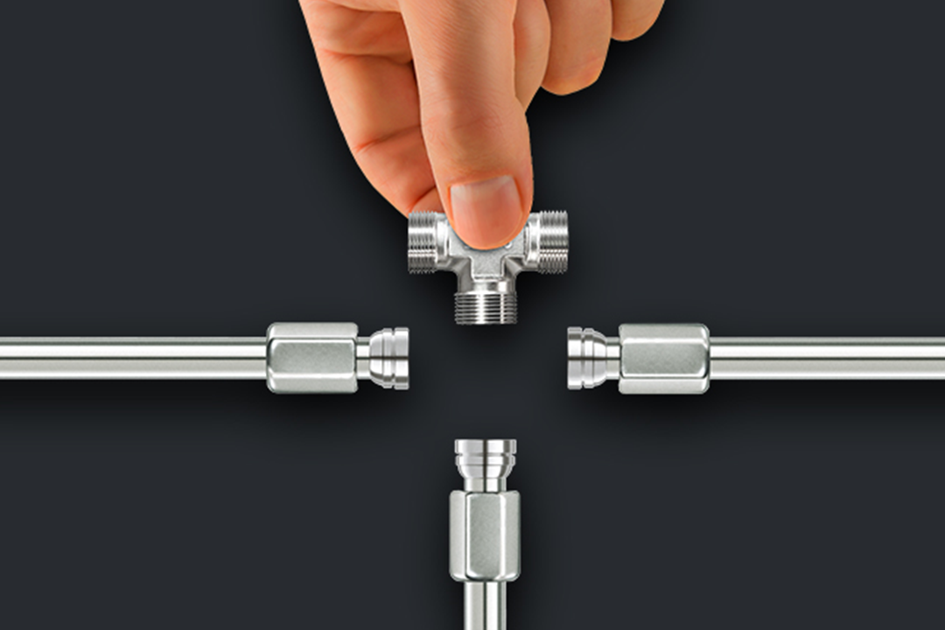
A properly sized hose with an unsuitable coupling can therefore still result in a hose assembly that does not meet the process requirements. Always start with the component in the hose assembly that has minimum allowable operating pressure.
How to Choose the Right Hose for the Right Pressure
When choosing a hose, you should therefore not consider pressure in isolation. To make a safe and sustainable choice of hose, several parameters must be taken into account.
Take the following into account, among other things:
- maximum operating pressure
- any pressure spikes
- operating temperature
- which medium is to be transported
- hose size
- Materials and Chemical Compatibility
- Bend radius and movements
- Selection of couplings and mounting method
- any hygiene requirements, certificates, or documentation.
A properly sized hose reduces the risk of breakdowns, unplanned downtime, and unnecessary wear and tear, while also making your process safer.
Do you need help choosing the right hose?
Are you unsure about which operating pressure, material, or hose type is right for your process? Our specialists will help you select the right hose based on pressure, temperature, the fluid being handled, and other application requirements.
Contact us for advice, or create an account in our online store to browse our selection and buy hoses online.
Get help choosing the right hose