Knowledge Article
Heat exchangers: efficient energy transfer for stable and sustainable operation

Harnessing excess heat or cooling in a controlled manner is crucial for keeping costs down, reducing emissions and creating stable processes. In industries such as energy, food, building services and process industries, heat exchangers are a crucial component.
Without the right heat exchanger, businesses risk higher energy consumption, unnecessary downtime and lower profitability. But with the right solution, the same process can become both more efficient and more sustainable.
In this blog post, we explain what a heat exchanger is, how it works and what benefits it brings to you as a customer.
What is a heat exchanger and why does it matter for your operation?
In heat exchanger is a technical device that transfers heat or cold from one medium to another without them mixing or coming into direct contact with each other. Usually they are liquids or gases flowing in separate channels.
By recovering energy and controlling temperatures with high precision, the heat exchanger becomes an indispensable component in many industrial and commercial systems.
How a heat exchanger works in practice
A heat exchanger can work in several stages depending on the design. Below we go through the principle of operation step by step.
1. Inlet and outlet for both media
A heat exchanger usually has two separate channels for the liquids or gases to be heated/cooled. They are usually referred to as the primary and secondary side.
2. First step - heat transfer
In the first stage, the hot fluid passes through part of the heat exchanger and heats a surface, usually a plate or tube, which separates it from the cold medium. The heat is transferred from the hot medium to the plate or tube.
3. Second step - heat transfer to the cold medium
The cold medium then passes through a separate part of the heat exchanger, parallel to the heated surface created in the first step. The heat is transferred from the heated surface (plate or tube) to the cold medium without mixing the two media.
4. Outlets for both media
After undergoing the heat transfer in the heat exchanger, the hot and cold media leave their respective channels through the outlets. The hot medium exits at a lower temperature, while the cold medium exits at a higher temperature than before the heat exchange.
Where does a heat exchanger have the greatest effect?
Heat exchangers make the biggest difference where stable temperature and energy recovery directly affect cost, quality and reliability. Example:
- Power plants: Increasing energy yield through recycling Recover waste heat for preheating or further distribution. This increases overall energy utilization and balances the load in the plant.
- Buildings: Reducing energy demand in heating and cooling systems Recovery between exhaust air/supply air or between cooling and heating side reduces power demand. The result is lower energy costs and a more stable indoor climate.
- Industrial processes: Stable quality and less downtime with precise temperature control Precise temperature control ensures product quality and process times. At the same time, it reduces the risk of overheating and unplanned downtime.
In common: The right heat exchanger boosts energy efficiency and reduces environmental impact, without compromising process requirements.
The benefits that strengthen your business
Using a heat exchanger is not just a technical solution, it is a strategic investment that strengthens competitiveness. Below we have listed the main effects you can count on:
- Efficient heat transfer - minimizes heat losses and maximizes resource utilization.
- Energy and cost savings - lower energy consumption means reduced operating costs over time.
- Reducing emissions - improving energy efficiency supports sustainability goals.
- Stability and capacity - consistent temperature increases productivity and reduces the risk of breakdowns.
- Flexibility - can be tailored to industry, application and space.
- Safety - separates media and reduces the risk of overheating or unwanted reactions.
An investment for sustainable and safe operations
For companies that want to reduce energy consumption, stabilize processes and at the same time strengthen sustainability efforts, the right heat exchanger is a strategic solution. With a properly sized and installed heat exchanger, you can reduce energy costs, increase capacity and build innovative operations over time.
Would you like to reduce energy consumption and optimize your process?
A properly sized heat exchanger can help reduce energy costs, ensure more stable operation, and improve capacity. Our specialists will help you select and size a solution based on the media, operating data, and process requirements.
Frequently asked questions about heat exchangers
What is a heat exchanger?
A technical device that transfers heat from one medium to another without mixing them, usually via separate channels and a partition.
How does a heat exchanger work?
The hot medium heats a separating surface (plate/tube) which in the next step gives off heat to the cold medium. The media are kept separate at all times.
Where are heat exchangers used?
In power plants, building climate control, air conditioning and industrial processes where stable temperature and energy efficiency are important.
What are the main benefits?
Lower energy costs, reduced emissions, more stable operation and flexible adaptation to process and space.
What types of heat exchangers are there?
The most common types are plate heat exchangers, tube heat exchangers, spiral heat exchangers and air heat exchangers. The choice is determined by the pressure, temperature, cleanliness and space requirements of the process. Each type has its advantages depending on the industry and application.
Explore our range of heat exchangers

MBS' proprietary range of hygienic scraped surface heat exchangers for viscous and demanding applications in the Food Industry. Modular and service-friendly design.
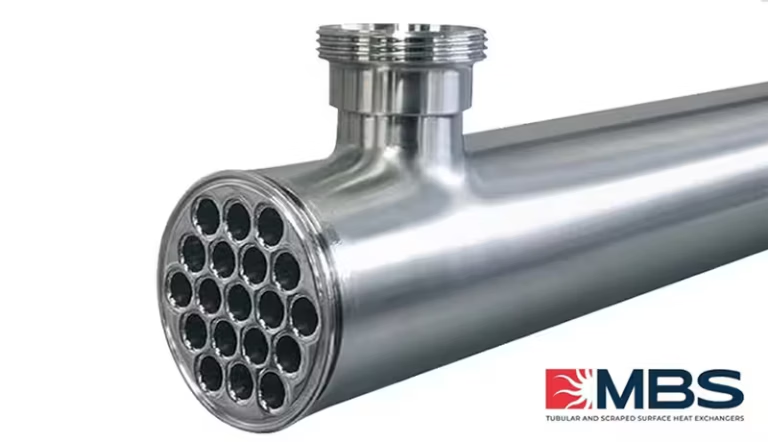
The MBS series MLW is designed and developed for the Brewery and Food Industry to meet the requirements of hygiene and gentle transfer of heat / cold to the product.

The MLI series of process heat exchangers from MBS is an extremely wide range of tube heat exchangers
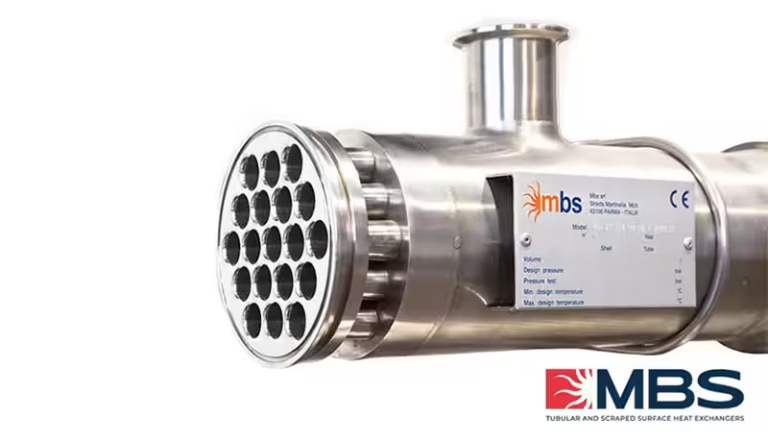
The MLP series from MBS is a series of double-jacketed and thus contamination-free tube heat exchangers for hygienic applications such as PW / WFI / Proteins in the pharmaceutical industry.
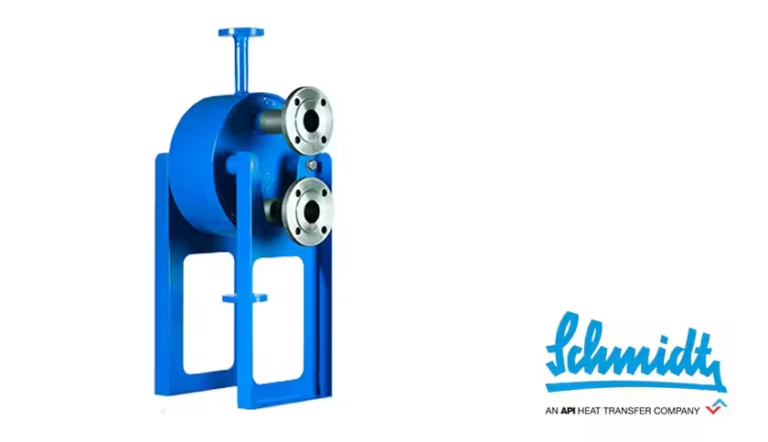
Shell & Plate heat exchangers for applications in the chemical, petrochemical and pharmaceutical industries. Withstands extreme temperatures and pressures.
Do you have any questions?